TL;DR:
- IT infrastructure consists of hardware, software, networks, and cloud platforms essential for organizational operation and growth. Investing in and managing this infrastructure effectively enhances operational efficiency, supports digital transformation, and maintains competitive advantage. Neglecting infrastructure leads to security risks, legacy system problems, and delays in adopting new technologies like AI.
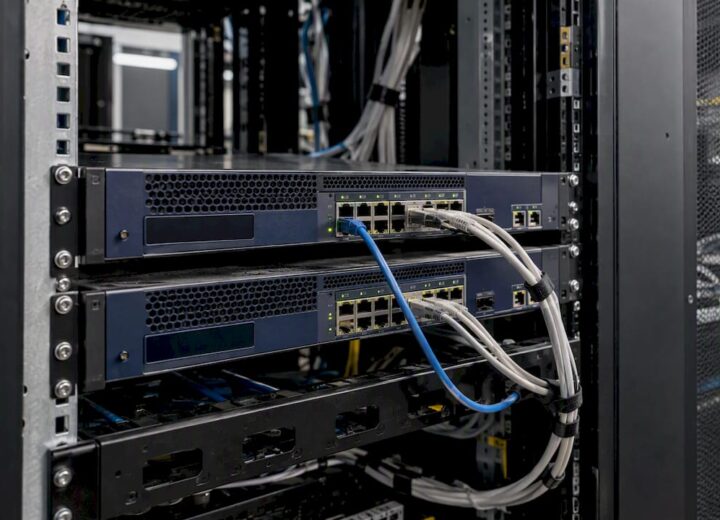
IT infrastructure is defined as the complete set of hardware, software, networks, and cloud platforms that an organisation depends on to operate and grow. Understanding why IT infrastructure matters is not a theoretical exercise. It is the difference between a business that scales confidently and one that stalls under the weight of its own complexity. Infrastructure now serves as a fundamental determinant of competitive advantage, providing the compute, connectivity, and power that every modern business function depends on. For IT decision-makers and managers, the question is no longer whether to invest in infrastructure. It is how to invest wisely and at the right pace.
Why does IT infrastructure matter for operational efficiency?
Good IT infrastructure is almost invisible when it works well. Effective infrastructure management prevents silent performance degradation and the productivity losses that accumulate quietly across teams. When networks are slow, servers are overloaded, or cloud connectivity is unreliable, staff lose time on every task. Those losses rarely appear on a single report, but they compound into significant operational drag over months.
The core components that drive operational efficiency include:
- Network performance: Latency and packet loss directly reduce application responsiveness, affecting everything from video calls to ERP transactions.
- Server reliability: Unplanned downtime halts workflows and triggers recovery costs that far exceed the cost of proactive maintenance.
- Cloud connectivity: Hybrid work models depend on consistent, low-latency access to cloud-hosted applications and data.
- Scalability: Infrastructure that cannot scale to meet demand forces organisations to choose between performance and cost at the worst possible moment.
Mobile connectivity infrastructure produces measurable economic returns, with a long-run elasticity of 0.06 in GDP growth, particularly in digitised sectors. That figure reflects what IT managers already know at the operational level: connectivity quality has a direct bearing on output.
Pro Tip: Set up continuous monitoring across your network, servers, and cloud endpoints. Catching degradation early, before users report it, is the clearest sign that your infrastructure management is working as it should.
Why is IT infrastructure crucial for digital transformation?
AI deployment is transitioning from a software-first to an infrastructure-first challenge, involving energy, cooling, and network capacity as primary constraints. This shift changes how IT managers must think about digital transformation. Software projects that once required only a capable development team now depend on physical and capital infrastructure that takes months or years to provision.
The infrastructure demands of modern digital initiatives follow a clear pattern:
- Compute density: AI workloads require GPU clusters and high-performance servers that standard data centre configurations cannot support without significant upgrades.
- Energy and cooling: Large-scale AI inference and training generate heat loads that demand purpose-built cooling systems and reliable power supply agreements.
- Network capacity: Moving large datasets between compute nodes, storage, and end users requires high-throughput, low-latency networking that goes beyond standard enterprise switching.
- Permitting and physical space: Infrastructure constraints such as grid capacity and permitting delays critically shape AI deployment pace and determine where organisations can realistically operate AI workloads.
Cloud adoption and hybrid work models add further demands. Organisations that move workloads to public cloud platforms still require well-designed on-premises or co-location infrastructure to manage data sovereignty, latency, and security. Security, in particular, must be embedded into infrastructure design from the outset. Zero Trust architecture, network access control (NAC), and ZTNA frameworks all depend on infrastructure that can enforce policy at the network layer, not just at the application layer. For IT managers exploring AI-driven network management, the infrastructure foundation determines what is achievable and how quickly.
What are the strategic benefits of investing in IT infrastructure?

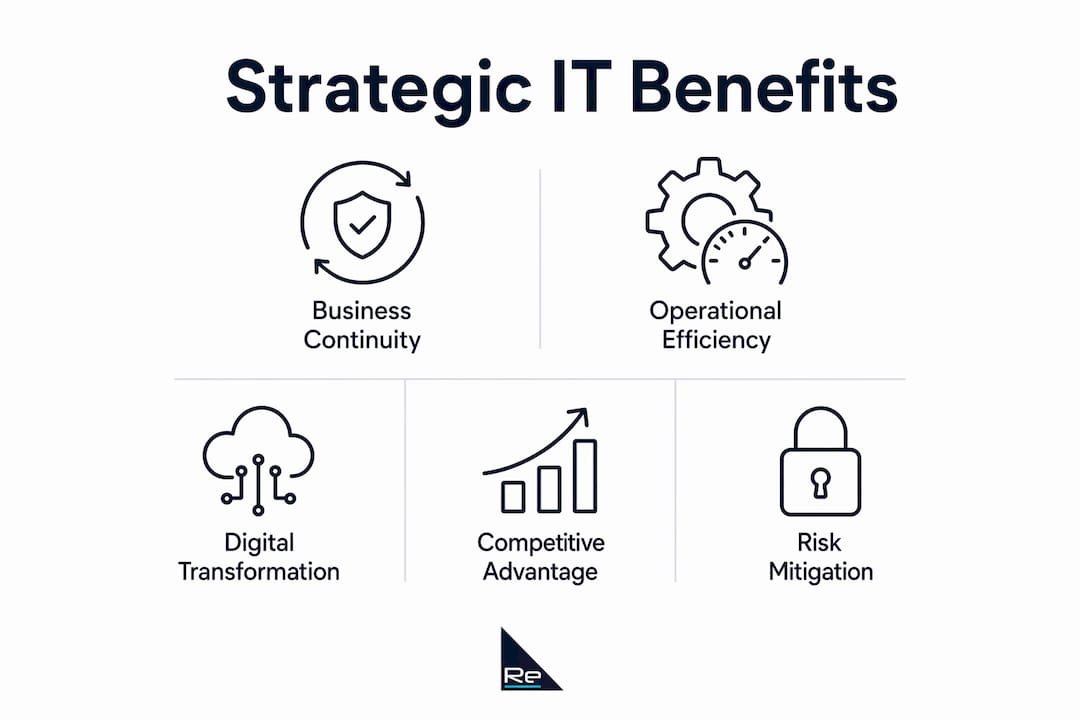
The strategic case for infrastructure investment extends well beyond operational efficiency. Infrastructure investment is integral to economic security and supply chain resilience, particularly given rising geopolitical tensions that disrupt global logistics and technology supply chains. Organisations that treat infrastructure as a strategic platform rather than a cost centre gain measurable advantages in continuity, compliance, and competitive positioning.
The economic evidence is clear:
“A sustained 5% increase in infrastructure stock is associated with an increase in long-run GDP growth by up to 0.45 percentage points.” This relationship holds at the organisational level too. Infrastructure investment compounds over time, creating platforms that support new revenue streams, faster product delivery, and lower operational risk.
The global scale of required investment underlines the strategic priority. The world requires approximately $106 trillion in cumulative infrastructure investment by 2040, with $36 trillion directed towards transport and logistics alone. Organisations that delay infrastructure investment do not avoid the cost. They defer it while accumulating technical debt and competitive disadvantage.
| Strategic benefit | What it delivers |
|---|---|
| Business continuity | Resilient infrastructure reduces unplanned downtime and supports rapid recovery from failures. |
| Regulatory compliance | Well-designed networks enforce data governance policies and support audit readiness. |
| Supply chain stability | Reliable connectivity and data systems keep supplier and logistics integrations functioning under pressure. |
| Competitive positioning | Organisations with modern infrastructure deploy new capabilities faster than those constrained by legacy systems. |
Digital infrastructure success depends on coordinated investment across power, connectivity, capital, and regulation. IT managers who understand this interdependency are better placed to build the internal business cases that secure board-level commitment. Re-solution’s guide on why to invest in IT infrastructure provides a practical framework for structuring that case in 2026.
What challenges do organisations face in IT infrastructure management?
Managing IT infrastructure at scale is genuinely difficult. Most organisations face a combination of legacy systems, growing complexity, security exposure, and cost pressure that makes every infrastructure decision feel like a trade-off.
The most common challenges include:
- Legacy system drag: Older hardware and software create compatibility barriers that slow down cloud migration, security upgrades, and application modernisation.
- Complexity creep: Each new tool or platform added without a clear integration plan increases the management burden and introduces new failure points.
- Security risks: Unpatched systems, misconfigured networks, and inadequate access controls create vulnerabilities that grow more serious as infrastructure expands.
- Cost management: Infrastructure spending is difficult to predict and justify when asset lifecycles are not tracked systematically.
- Scaling under pressure: Organisations that grow quickly often find their infrastructure was designed for a smaller operational footprint and cannot keep pace.
Overcoming these challenges requires a structured approach to infrastructure lifecycle planning. This means tracking asset age and performance, scheduling upgrades before systems reach end of life, and aligning infrastructure roadmaps with business growth plans. Proactive maintenance consistently outperforms reactive repair in both cost and reliability terms.
Pro Tip: Audit your tool estate annually. Fragmented infrastructure, where multiple overlapping tools perform similar functions, is one of the most common and most avoidable sources of cost and complexity in mid-sized organisations.
Re-solution’s detailed guide on common infrastructure challenges covers practical strategies for each of these areas, including how to prioritise remediation when budgets are constrained. For IT managers tracking emerging network trends, 2026 network operations developments offer useful context on where infrastructure management is heading.
Key takeaways
IT infrastructure is the operational and strategic foundation that determines how well an organisation performs, scales, and competes in a technology-driven environment.
| Point | Details |
|---|---|
| Infrastructure drives efficiency | Network, server, and cloud performance directly affect staff productivity and operational costs every day. |
| AI demands infrastructure first | Deploying AI requires compute, cooling, power, and network capacity, not just software licences. |
| Investment compounds over time | A sustained increase in infrastructure stock produces measurable long-run gains in growth and resilience. |
| Lifecycle planning prevents debt | Tracking asset age and scheduling upgrades avoids the compounding cost of legacy system drag. |
| Security must be built in | Zero Trust, NAC, and ZTNA frameworks only work when the underlying infrastructure is designed to enforce them. |
Infrastructure invisibility is the goal, and the risk
After 35 years working in and around Cisco IT infrastructure, the pattern I keep returning to is this: the best infrastructure is the kind nobody notices. When networks are fast, servers are reliable, and cloud access is consistent, the technology disappears into the background and people just get on with their work. That invisibility is the goal.
The risk is that invisibility can be mistaken for unimportance. Boards that never hear about infrastructure problems sometimes conclude that infrastructure does not need investment. That is exactly when the problems begin to accumulate. Legacy systems age past their support windows. Security gaps widen. Capacity limits approach without warning.
The shift towards AI workloads has made this dynamic more visible and more urgent. AI is not a software project you can run on existing kit. It is an infrastructure challenge that requires physical planning, capital commitment, and coordination across power, cooling, and networking. Organisations that treat it as anything less will find their AI ambitions constrained by the very infrastructure they chose not to prioritise.
My view is straightforward: infrastructure leadership is now a board-level conversation, not just an IT department concern. The managers who make that case clearly, with data and a credible roadmap, will be the ones who shape their organisation’s next decade.
— Jacob
How Re-solution supports IT infrastructure excellence
Re-solution has over 35 years of experience designing, implementing, and managing Cisco IT infrastructure for organisations across education, manufacturing, logistics, and hospitality.

Whether you need a full infrastructure audit to identify performance gaps, a Network as a Service deployment to reduce capital expenditure, or a security architecture review to close compliance risks, Re-solution provides tailored support at every stage. The team works with IT managers to align infrastructure investment with business goals, not just technical specifications. For a clear starting point, Re-solution’s IT infrastructure explained guide covers the foundations in plain language, making it easier to build internal consensus and move forward with confidence.
FAQ
What is IT infrastructure and why does it matter?
IT infrastructure is the combination of hardware, software, networks, and cloud platforms that an organisation uses to operate. It matters because every business function, from communication to data processing, depends on it performing reliably.
How does IT infrastructure affect business performance?
Poor infrastructure causes silent productivity losses through slow systems, unplanned downtime, and unreliable connectivity. Effective infrastructure management prevents this degradation before it affects users or output.
Why is IT infrastructure important for AI and digital transformation?
AI deployment is now an infrastructure-first challenge, requiring compute density, energy, cooling, and network capacity that most standard environments cannot provide without planned upgrades.
What are the biggest risks of neglecting IT infrastructure investment?
Legacy systems, security vulnerabilities, and capacity constraints accumulate over time. Organisations that defer investment face higher remediation costs, greater compliance risk, and slower deployment of new technologies.
How much should organisations invest in IT infrastructure?
The right level depends on organisational size, growth plans, and technology roadmap. The starting point is a structured network audit that maps current performance against future requirements and identifies the highest-priority gaps.
Recommended
- Why invest in IT infrastructure: a 2026 guide
- Types of IT infrastructure: a 2026 guide for IT teams
- Challenges in IT Infrastructure & How to Overcome | Re-Solution