TL;DR:
- IT infrastructure includes hardware, software, networks, facilities, and security essentials for delivering IT services. Understanding these components helps decision-makers optimize investments, manage risks, and ensure reliable service delivery.
IT infrastructure is defined as the complete set of hardware, software, networks, and facilities required to develop, deliver, and support IT services within an organisation. Every application your teams run, every file they access, and every connection they make depends on this foundation. For IT professionals and decision-makers, understanding IT infrastructure fundamentals is not optional. It directly shapes technology investment, risk management, and service delivery. This article covers the core components, deployment models, governance frameworks, and practical decision factors that define IT infrastructure today.
What are the core components of IT infrastructure?
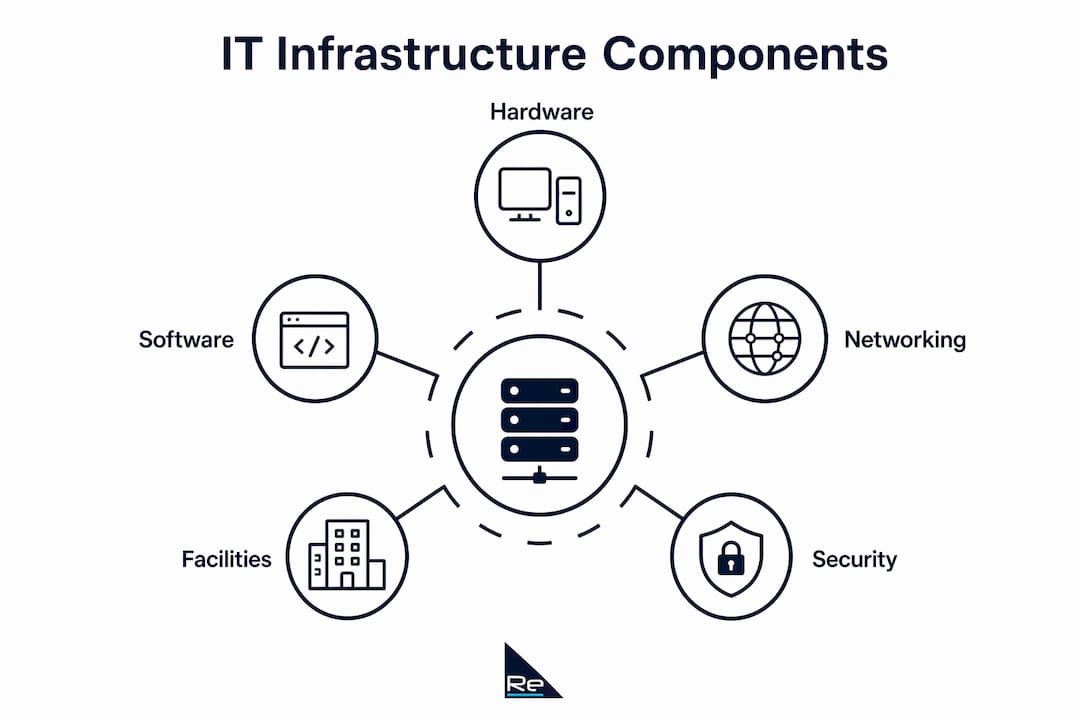
IT infrastructure components fall into five primary domains: hardware, software, networking, facilities, and security. Each domain serves a distinct function, and each depends on the others to operate reliably. Decision-makers who understand this layered structure make better investment choices.
Hardware
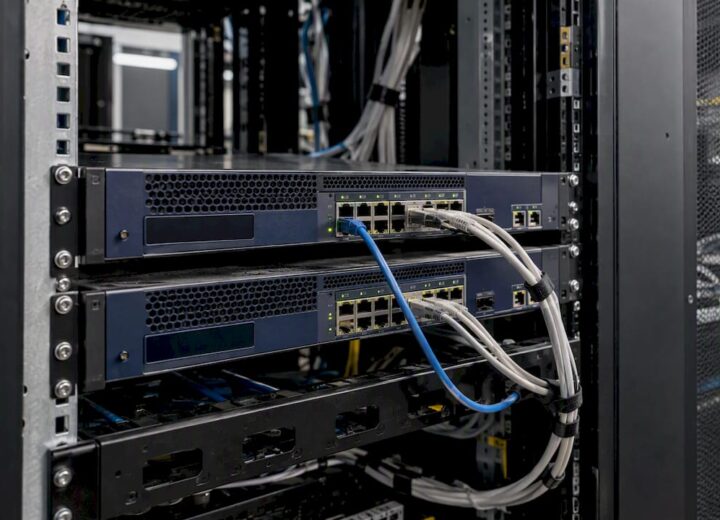
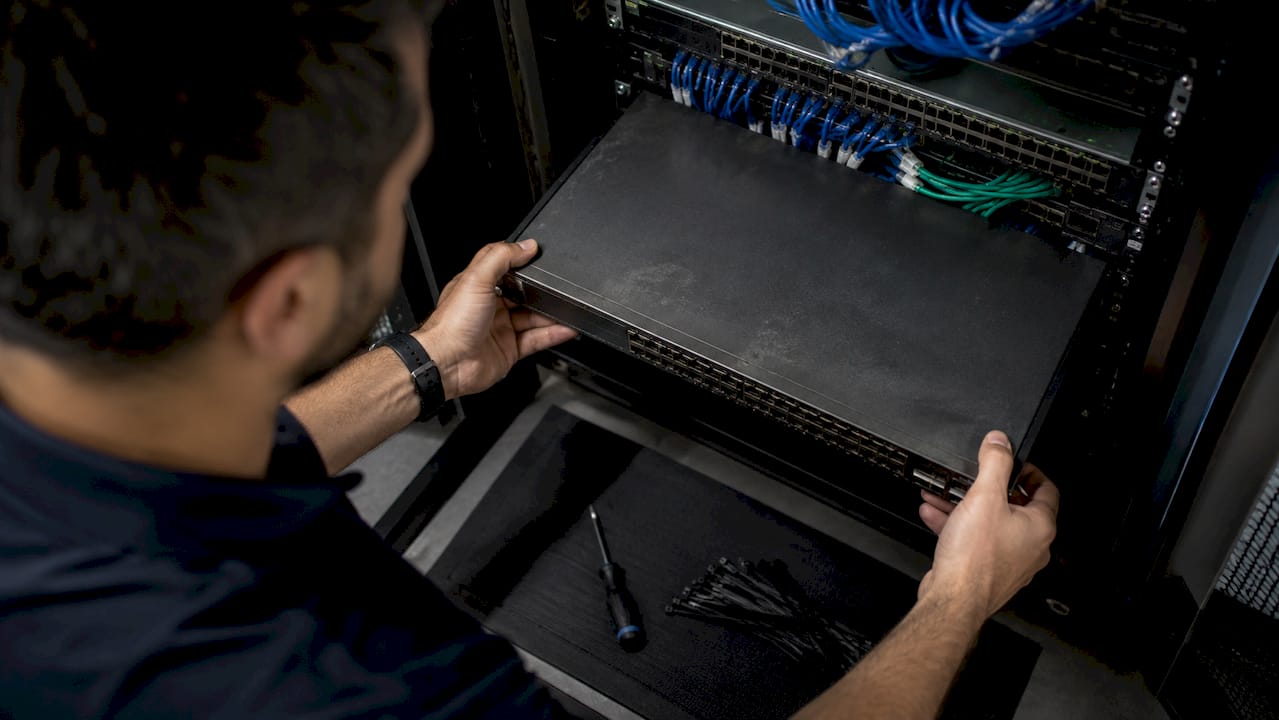
Hardware forms the physical base of any IT environment. Servers, storage devices, routers, switches, and firewalls are the physical assets that process, store, and transmit data. Without adequately specified hardware, no software or service layer can perform reliably.
Software
Software sits above hardware and makes it useful. Operating systems, middleware, virtualisation software, and applications are the layers that translate raw computing power into functional services. Virtualisation is particularly significant: it allows a single physical server to run multiple isolated workloads, which reduces hardware costs and increases flexibility.
Networking
Networking connects every component. Routers direct traffic between networks, switches connect devices within a local network, and firewalls enforce access policies. Protocols such as TCP/IP govern how data moves. Without a well-designed network, even powerful hardware and software cannot deliver consistent services to end users.
Facilities and security
Data centres and supporting facilities provide the physical environment that houses infrastructure. Power supply, cooling systems, and physical access controls are not secondary concerns. They are the conditions under which all other components operate. Security infrastructure, including firewalls, intrusion detection systems, and access controls, protects assets at every layer.
The table below summarises each component and its primary function.
| Component | Primary function |
|---|---|
| Servers | Process and host applications and data |
| Storage devices | Retain and retrieve data at scale |
| Routers and switches | Direct and manage network traffic |
| Operating systems | Manage hardware resources and run applications |
| Virtualisation software | Run multiple workloads on shared physical hardware |
| Firewalls | Enforce network access policies and filter threats |
| Data centres | House infrastructure with power, cooling, and physical security |
How do on-premises, cloud, and hybrid models differ?
The three primary IT infrastructure deployment models are on-premises, cloud, and hybrid. Each model distributes control and operational responsibility differently. Choosing the wrong model for your organisation’s needs creates cost overruns, compliance gaps, or performance problems.
On-premises infrastructure means the organisation owns and manages all hardware, software, and facilities. The IT team controls every layer, from physical servers to application configuration. This model suits organisations with strict data sovereignty requirements or highly specialised workloads.
Cloud infrastructure is delivered by providers such as AWS, Microsoft Azure, and Google Cloud. Cloud service models differ by operational control: IaaS customers manage the operating system and above; PaaS customers manage only application code and data; SaaS customers configure applications within a fully provider-managed stack. The further up the stack you move, the less your team manages directly.
Hybrid infrastructure combines on-premises assets with one or more cloud environments. This model is now common across manufacturing, education, and logistics sectors, where some workloads must remain on site while others benefit from cloud elasticity.
The table below maps control and responsibility across the three cloud service models.
| Layer | IaaS | PaaS | SaaS |
|---|---|---|---|
| Physical hardware | Provider | Provider | Provider |
| Operating system | Customer | Provider | Provider |
| Application runtime | Customer | Provider | Provider |
| Application code | Customer | Customer | Provider |
| Data | Customer | Customer | Customer |
Operational responsibility mapping is where many organisations make costly errors. Teams assume the cloud provider covers more than it does, leaving security controls and compliance obligations unmanaged.
Pro Tip: Before committing to any cloud service model, document which team owns each infrastructure layer. Use the shared responsibility model as a checklist, not an assumption. This single step prevents the most common compliance gaps in cloud deployments.
What IT infrastructure management frameworks guide governance?
ITIL provides best practices for IT service management, with a direct focus on aligning infrastructure to business outcomes. ITIL 4 organises its guidance into general management, service management, and technical management practice categories. Each category addresses a different aspect of how infrastructure is planned, delivered, and maintained.
For decision-makers, the most relevant ITIL practices include:
- Service configuration management: Tracks all infrastructure components and their relationships, giving teams an accurate picture of what exists and how it connects.
- Availability management: Defines targets for uptime and designs infrastructure to meet them, reducing unplanned outages.
- Capacity and performance management: Matches infrastructure resources to current and projected demand, preventing both over-provisioning and bottlenecks.
- Risk management: Identifies threats to infrastructure continuity and defines controls to reduce exposure.
- IT asset management: Governs the lifecycle of hardware and software assets from procurement through decommissioning.
Infrastructure investment decisions are most effective when tied directly to service management outcomes. Buying more server capacity because it is cheap is not a strategy. Buying capacity because a capacity management review shows projected demand will exceed current resources in six months is. ITIL provides the structured process to make that distinction consistently.
Other frameworks such as COBIT and ISO/IEC 27001 complement ITIL by addressing governance and information security respectively. Organisations operating in regulated sectors, including financial services and healthcare, often use all three in combination.
What factors influence IT infrastructure investment decisions?
Sound IT infrastructure planning requires balancing cost, performance, security, and future demand. No single factor dominates. The right balance depends on your organisation’s size, sector, and risk appetite.
The key decision factors are:
- Scalability: Can the infrastructure grow with demand without requiring a full replacement cycle? Cloud and virtualised environments scale more easily than fixed on-premises hardware.
- Security and compliance: Regulatory requirements in sectors such as education, manufacturing, and hospitality dictate minimum security controls. Cybersecurity compliance is not a post-deployment consideration. It must be built into the infrastructure design from the start.
- Total cost of ownership: Capital expenditure on hardware is visible. Operational costs for power, cooling, licensing, and staff time are often underestimated. Cloud models shift costs from capital to operational expenditure, which changes budget planning significantly.
- Resilience and redundancy: Single points of failure in networking or power supply create unacceptable risk for most organisations. Redundant systems and failover configurations are standard practice in well-designed infrastructure.
- Monitoring and maintenance: Infrastructure without active monitoring degrades silently. Tools such as Cisco DNA Center and SolarWinds provide visibility into network performance, hardware health, and security events.
Pro Tip: Conduct a structured infrastructure audit before any major investment decision. An audit maps your current assets, identifies gaps, and provides a baseline against which new investments can be measured. Re-solution offers infrastructure audit services that give organisations a clear picture before committing budget.
Emerging technologies also reshape infrastructure decisions. Virtualisation has reduced the physical footprint of on-premises environments significantly. Software-defined networking (SDN) separates network control from hardware, giving teams greater flexibility. Zero Trust security architecture changes how access controls are designed across both on-premises and cloud environments. Decision-makers who understand these trends make infrastructure choices that remain relevant for longer.
Key takeaways
Effective IT infrastructure governance requires aligning hardware, software, networking, facilities, and security decisions with defined service management outcomes, using frameworks such as ITIL to guide investment and reduce risk.
| Point | Details |
|---|---|
| Infrastructure has five domains | Hardware, software, networking, facilities, and security each serve a distinct and interdependent function. |
| Cloud models vary by control | IaaS, PaaS, and SaaS each assign different operational responsibilities to the customer and the provider. |
| ITIL aligns investment to outcomes | ITIL 4 practices such as capacity management and risk management connect infrastructure decisions to service goals. |
| Shared responsibility requires mapping | Teams must document which layer each party owns in cloud deployments to prevent compliance and security gaps. |
| Audits precede good investment | A structured infrastructure audit establishes the baseline needed to make sound technology investment decisions. |
Why infrastructure fundamentals still separate good IT leaders from the rest
After working with IT teams across education, manufacturing, and logistics, one pattern stands out consistently. The organisations that make the best infrastructure decisions are not necessarily the ones with the largest budgets. They are the ones whose leaders genuinely understand what they own and why it matters.
The shift to cloud has made this harder, not easier. When infrastructure becomes invisible, the temptation is to assume the provider handles everything. That assumption is where most cloud security incidents begin. The shared responsibility model is not a technicality. It is the document that defines who is accountable when something fails.
I have also seen organisations invest heavily in new hardware or cloud services without first understanding their current state. The result is duplication, wasted spend, and infrastructure that nobody can fully explain. An ITIL-aligned capacity review or a proper infrastructure lifecycle assessment would have prevented most of those situations.
The fundamentals do not change as fast as the technology does. Hardware still fails. Networks still need segmentation. Data still needs protecting. Decision-makers who keep those fundamentals sharp will navigate every new technology wave more confidently than those who chase trends without a foundation.
— Jacob
How Re-solution helps IT teams build on solid foundations
Re-solution has over 35 years of experience as a Cisco partner, working with IT teams across education, manufacturing, hospitality, and logistics to design, audit, and manage infrastructure that performs reliably.

Whether your organisation is assessing its current infrastructure, planning a cloud migration, or addressing compliance gaps, Re-solution provides the expertise to make those decisions with confidence. From managed IT services and Network as a Service to full infrastructure audits, the team works with your specific environment rather than applying a generic template. For a clear starting point, the IT infrastructure overview on the Re-solution website covers the core concepts in practical terms. Contact Re-solution to discuss your infrastructure requirements directly.
FAQ
What is IT infrastructure?
IT infrastructure is the complete set of hardware, software, networks, and facilities required to develop, deliver, and support IT services within an organisation. It includes physical components such as servers and data centres, as well as software layers including operating systems and virtualisation platforms.
What are the main components of IT infrastructure?
The main components are hardware, software, networking equipment, facilities such as data centres, and security controls. Each component serves a distinct function and depends on the others to operate reliably.
What is the difference between IaaS, PaaS, and SaaS?
IaaS gives customers control from the operating system upward; PaaS limits customer responsibility to application code and data; SaaS provides a fully managed application where the customer configures rather than manages. The key difference is how much of the infrastructure stack the customer is responsible for operating.
Why does the shared responsibility model matter in cloud infrastructure?
The shared responsibility model defines which infrastructure layers the cloud provider manages and which the customer must manage. Misunderstanding this boundary is a leading cause of security and compliance gaps in cloud deployments.
What is ITIL and why is it relevant to IT infrastructure?
ITIL is a framework of best practices for IT service management that aligns infrastructure decisions with business outcomes. Its practices for capacity management, risk management, and asset management give IT teams a structured approach to governing infrastructure investments.
Recommended
- IT Infrastructure Explained Simply | Re-Solution
- Types of IT infrastructure: a 2026 guide for IT teams
- Network Infrastructure Planning Simplified | Re-Solution