Most hospitality leaders still believe that exceptional service is purely about face-to-face interactions and well-trained staff. Yet the reality is that integrated guest experience platforms with mobile check-in and AI personalisation are redefining hospitality operations. Modern IT solutions now form the invisible backbone of every memorable guest journey, from seamless arrival to personalised room experiences and frictionless checkout. This guide reveals the platforms, trends, ROI metrics, and security practices that every hospitality decision-maker must understand to stay competitive in 2026 and beyond.
Table of Contents
- How IT solutions are redefining hospitality
- Core IT systems every hotel needs
- Real-world impact: Proven ROI from IT investments
- Best practices for seamless and secure IT implementation
- Emerging trends: The future of IT in hospitality
- Connect with IT experts for your hospitality strategy
- Frequently asked questions
Key Takeaways
| Point | Details |
|---|---|
| Integration is essential | Unified platforms consistently outperform siloed tools, reducing errors and boosting efficiency. |
| AI drives revenue | Hotels using AI solutions gain up to 15 percent more revenue through personalised service and dynamic pricing. |
| Security is non-negotiable | Advanced network protection and regular staff training are vital given modern threat levels. |
| Proven ROI | Case studies confirm that IT investments deliver tangible returns in bookings, upsells, and labour savings. |
| Future-proofing matters | Staying ahead with emerging trends keeps hotels competitive and adaptable to guest expectations. |
How IT solutions are redefining hospitality
Guest expectations have shifted dramatically. Today’s travellers demand instant responses, personalised recommendations, and mobile-first interactions throughout their stay. Competition from boutique hotels and alternative accommodation providers has intensified pressure on traditional properties to innovate or lose market share.
Integrated platforms automate guest interactions, enable upsells, and unify service channels across every touchpoint. These systems transform IT from a back-office function into a strategic revenue driver. Hotels that embrace this shift gain measurable advantages in guest satisfaction, operational efficiency, and profitability.
The hospitality IT market reflects this transformation. Industry analysts project substantial growth as properties invest in cloud-based systems, AI-powered tools, and mobile platforms. This expansion signals a fundamental change in how hotels compete and deliver value.
New IT priorities for hospitality include:
- Guest experience platforms that unify mobile check-in, room controls, concierge services, and feedback collection
- Revenue automation through dynamic pricing, targeted upsells, and personalised offers
- Operational efficiency via automated workflows, integrated systems, and real-time analytics
- Network security protecting guest data, payment information, and operational systems
- Staff productivity tools reducing manual tasks and enabling focus on high-value interactions
These priorities require robust hospitality IT expertise to implement effectively. Properties that treat IT as strategic infrastructure rather than technical overhead consistently outperform competitors in guest satisfaction and financial metrics.
Core IT systems every hotel needs
Every modern hotel operation depends on four essential technology categories. Understanding their functions, integration requirements, and benefits helps you build a cohesive digital foundation.
| System Type | Primary Functions | Key Benefits | Examples |
|---|---|---|---|
| Property Management System (PMS) | Reservations, check-in/out, housekeeping, billing | Central operations hub, real-time availability, guest history | Oracle OPERA Cloud, Cloudbeds |
| Point of Sale (POS) | Restaurant orders, bar sales, room service, retail | Revenue tracking, inventory management, integrated billing | Lightspeed, Toast |
| Guest Experience Platform | Mobile services, room controls, concierge, upsells | Personalisation, automation, direct communication | INTELITY GEMS 2.0, Hudini |
| AI-Powered Tools | Chatbots, dynamic pricing, predictive analytics, service automation | 24/7 availability, revenue optimisation, efficiency gains | Nexus AI, StayGrid AI |
The property management system market is projected to grow from $3.6 billion in 2024 to $8.5 billion by 2034 at a 9.2% compound annual growth rate. This expansion reflects the critical role PMS plays as the operational nerve centre for modern hotels.
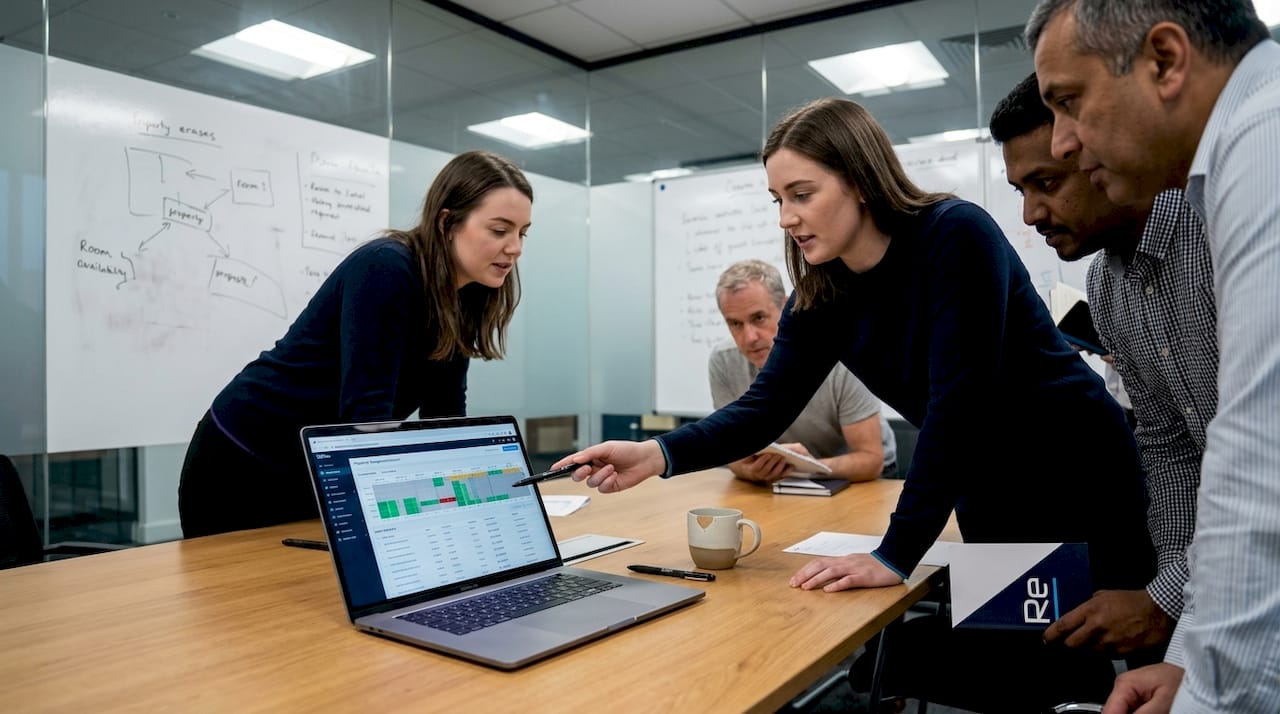
Cloud architecture has become non-negotiable for these systems. Cloud-based platforms offer automatic updates, remote access, disaster recovery, and scalability without capital expenditure on servers. Deep API integration between systems eliminates manual data entry, reduces errors, and enables automation across your entire operation.
Stepwise rollout for hotels updating systems:
- Audit current systems to identify gaps, redundancies, and integration failures
- Prioritise replacements based on operational impact and ROI potential
- Select cloud-native platforms with proven API integrations and hospitality-specific features
- Plan phased implementation to minimise disruption during peak periods
- Train staff thoroughly on new workflows and capabilities before go-live
- Monitor performance metrics to validate improvements and identify optimisation opportunities
Pro Tip: Avoid siloed legacy tools that require manual data transfer between systems. Integrated platforms reduce errors by up to 90% and free staff time for guest-facing activities rather than administrative tasks.
Successful implementation requires more than selecting the right software. Your underlying network solutions must provide reliable connectivity, adequate bandwidth, and proper segmentation to support these mission-critical applications.
Real-world impact: Proven ROI from IT investments
Hospitality IT investments deliver measurable returns across revenue, efficiency, and guest satisfaction metrics. Decision-makers need concrete data to justify technology expenditure and prioritise initiatives.
| Metric | Improvement | Property Example | Technology Driver |
|---|---|---|---|
| Revenue Growth | 100% increase | Marriott Costa Rica | Guest experience platform |
| Booking Volume | 5x increase | Multiple properties | AI-powered chatbots |
| Inquiry Resolution | 90% automated | The Chandler Hotel | AI agents |
| Digital Order Revenue | 58% of total | Grand Hyatt Singapore | In-room dining platform |
| Labour Cost Savings | $3,600 monthly | Grand Hyatt Singapore | Digital ordering system |
| RevPAR Increase | 10-15% boost | Early AI adopters | Dynamic pricing AI |
These results come from documented case studies across diverse property types. Hotels have achieved 100% revenue growth, 5x booking increases, 90% automated inquiry resolution, and dramatic upsell improvements through strategic IT deployment.
“AI-driven solutions like Nexus AI boost RevPAR by 10-15% whilst simultaneously reducing operational costs and improving guest satisfaction scores.”
Practical benefits felt across your operation:
- Staff experience fewer repetitive tasks, allowing focus on complex guest needs and relationship building
- Management gains real-time visibility into operations, revenue, and guest sentiment for faster decision-making
- Guests enjoy seamless experiences from booking through checkout without friction or delays
- Finance teams track performance with granular data on revenue sources, cost centres, and profitability by segment
Third-party research validates these outcomes. Industry studies consistently show that properties investing in integrated IT platforms outperform competitors on guest satisfaction scores, online review ratings, and revenue per available room.
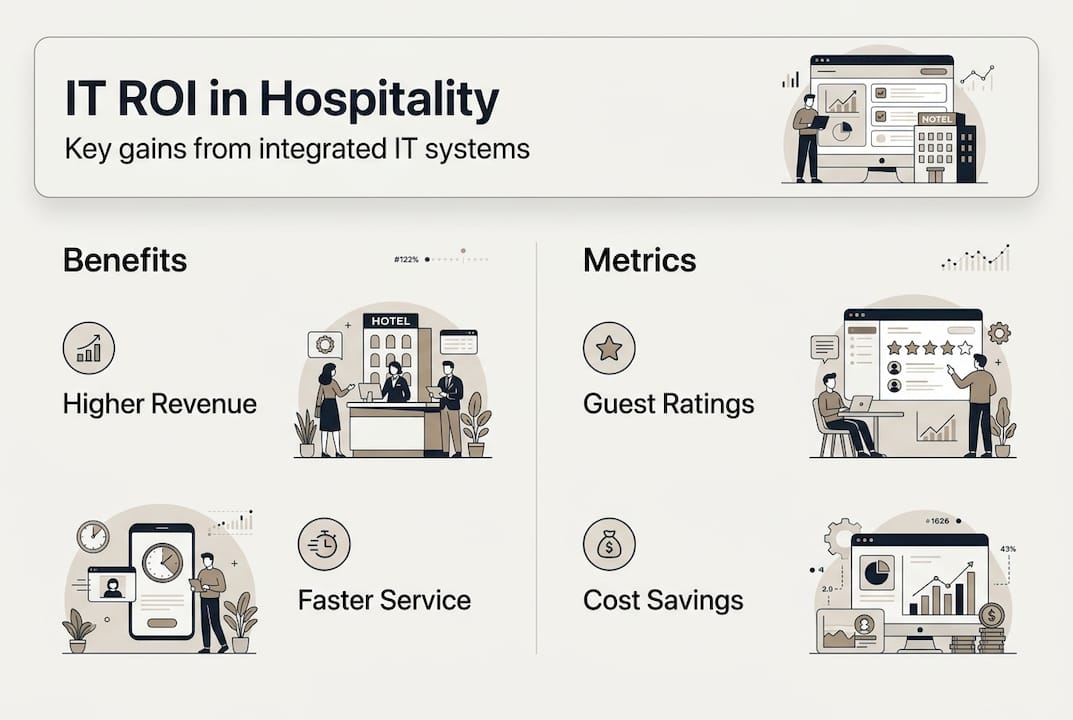
The ROI timeline varies by system type. Guest experience platforms often show returns within 6-12 months through increased upsells and reduced labour costs. PMS replacements may require 18-24 months to fully realise benefits as staff adapt and processes optimise. AI tools frequently deliver immediate wins in specific areas like inquiry automation or dynamic pricing.
Understanding these metrics helps you build business cases for IT investment and set realistic expectations for returns. Proper implementation with strong network solutions ensures you capture the full value of your technology spend.
Best practices for seamless and secure IT implementation
Deploying hospitality IT systems requires careful attention to security, usability, and operational continuity. The right approach protects your investment whilst minimising disruption.
IT security best practices for hospitality environments:
- Segment guest Wi-Fi and IoT devices from critical operational systems to contain potential breaches
- Require multi-factor authentication for all staff access to sensitive systems and data
- Encrypt data in transit and at rest to protect guest information and payment details
- Update legacy systems that no longer receive security patches or vendor support
- Implement zero-trust architecture that verifies every access request regardless of network location
- Develop incident response plans with clear roles, communication protocols, and recovery procedures
These measures are essential given that 82% of North American hotels have faced cyberattacks. Properties that segment networks, require strong authentication, encrypt data, and maintain updated systems significantly reduce their risk exposure.
Hospitality environments present unique security challenges. High staff turnover means systems must be intuitive enough for new employees to use safely without extensive training. IoT devices for contactless operations create additional attack surfaces that require proper network segmentation and monitoring.
API integration security deserves special attention in multi-system environments. Each connection between your PMS, POS, guest platform, and other tools represents a potential vulnerability. Ensure APIs use modern authentication standards, encrypt all data transfers, and log access for audit purposes.
Pro Tip: Invest in ongoing staff training as technology and threat landscapes evolve. Quarterly security awareness sessions reduce human error incidents by up to 70% and help staff recognise phishing attempts, social engineering, and suspicious activity.
Your network security best practices form the foundation for all other IT initiatives. Without proper network segmentation, access controls, and monitoring, even the best applications remain vulnerable to compromise.
Consider implementing a network access controller to automate device authentication, enforce security policies, and provide visibility into everything connected to your network. This approach simplifies management whilst strengthening your security posture.
Emerging trends: The future of IT in hospitality
Hospitality technology continues evolving rapidly. Understanding upcoming trends helps you make investment decisions that remain relevant as guest expectations and competitive dynamics shift.
Upcoming trends shaping hospitality through 2026 and beyond:
- AI personalisation that learns individual guest preferences and proactively suggests services, dining options, and local experiences
- Voice command integration allowing guests to control room features, request services, and access information through natural language
- IoT-driven automation that adjusts lighting, temperature, and entertainment based on occupancy and learned preferences
- Frictionless mobile ecosystems enabling guests to complete their entire journey from booking to checkout without physical touchpoints
- Predictive service delivery using AI to anticipate guest needs before they’re expressed
- Real-time sentiment analysis monitoring feedback channels to identify and resolve issues immediately
Early adopters of AI solutions are already seeing substantial benefits. AI technologies deliver up to 35% revenue growth through predictive service bots and dynamic pricing for properties that implement them strategically.
Payment technology advances are removing friction from guest transactions. Contactless payments, mobile wallets, and integrated billing systems reduce checkout time and improve the departure experience. Smart devices throughout properties enable new service models and operational efficiencies.
Future-proofing your current investments requires selecting platforms with open APIs, regular update cycles, and vendor commitment to innovation. Cloud-native systems adapt more readily to new capabilities than legacy on-premises software.
The competitive advantage increasingly belongs to properties that can rapidly deploy new capabilities as guest expectations evolve. Your IT architecture should enable experimentation with emerging technologies without requiring wholesale system replacements.
Staying current with these trends positions your property ahead of competitors still relying on traditional approaches. The gap between technology leaders and laggards in hospitality continues widening as guests gravitate toward properties offering seamless digital experiences.
Investing in robust infrastructure now, including modernised IT systems, ensures you can adopt these innovations as they mature without starting from scratch.
Connect with IT experts for your hospitality strategy
IT solutions have become central to hospitality success, driving guest satisfaction, operational efficiency, and revenue growth. The complexity of selecting, implementing, and securing these systems requires specialised expertise.
Re-Solution brings over 35 years of experience helping hospitality properties design and deploy robust IT infrastructure. As a trusted Cisco partner, we understand the unique connectivity, security, and reliability requirements of hotels, resorts, and hospitality venues.
Whether you’re planning a complete IT transformation or addressing specific challenges with guest experience, network security, or operational systems, expert guidance helps you avoid costly mistakes and accelerate your technology ROI. Our Network as a Service offering provides predictable costs and continuous optimisation without capital expenditure.
We offer comprehensive audits to assess your current infrastructure, identify vulnerabilities, and recommend improvements aligned with your business objectives. Our team designs network solutions that support your guest experience platforms, operational systems, and security requirements.
Our security services protect your property from the cyber threats facing 82% of hospitality organisations. We implement network segmentation, access controls, and monitoring systems that safeguard guest data whilst maintaining the seamless connectivity your operations require.
Frequently asked questions
What are the core IT systems a hotel needs today?
Every modern hotel needs a robust property management system, integrated point of sale, guest experience platform, and strong network security tools. These systems form the backbone of hotel IT operations.
How does AI technology benefit hotel operations?
AI personalises stays, automates guest requests, optimises pricing, and can raise revenue by up to 15%. It also reduces operational costs by handling routine inquiries and tasks automatically.
How can hotels protect themselves from cyber threats?
Segment guest and staff networks, require strong authentication, keep systems updated, and train staff regularly. Given that 82% of hotels faced attacks, these protections are essential.
What is the ROI of digital in-room dining and POS?
Hotels like Grand Hyatt Singapore have achieved 58% digital order revenue and saved $3,600 per month in labour costs. Digital ordering systems typically show returns within 6-12 months.
What’s next for IT solutions in hospitality?
Voice technology, advanced AI, smart devices, and mobile-first platforms will further automate and personalise guest experiences. AI and mobile advances will lead the next wave of digital transformation in hospitality.
Recommended
- Hospitality | Cisco Cloud, Security & Datacenter Experts
- Housing | Cisco Cloud, Security & Datacenter Experts
- How to Customize IT Solutions for Your Business | Re-Solution
- Case Studies | Ailerons IT Consulting