Many organisations cling to legacy systems, believing incremental patches suffice. Yet outdated IT infrastructure consumes 75% of budgets whilst hampering connectivity and security. Across education, manufacturing, and hospitality sectors, decision-makers face mounting pressure to modernise infrastructure that no longer meets operational demands. This guide reveals practical strategies to transform legacy environments into agile, secure networks that drive efficiency gains of up to 30% and slash workloads by 70%, delivering measurable ROI whilst protecting critical assets.
Table of Contents
- Understanding IT Infrastructure Modernisation
- Modernisation Strategies For Manufacturing Industry
- Advancing IT Infrastructure In Hospitality
- IT Modernisation Considerations For Education Sector
- Discover Professional IT Infrastructure Solutions
Key takeaways
| Point | Details |
|---|---|
| Efficiency gains | Modernisation delivers up to 30% efficiency improvements and 70% workload reductions across sectors |
| Security priority | Zero Trust frameworks and enhanced connectivity protect against escalating cyber threats |
| Budget impact | Legacy maintenance consumes 75% of IT budgets, leaving minimal resources for innovation |
| Phased approach | Cloud and AI integration in stages minimises disruption whilst maximising return on investment |
| Sector specificity | Tailored strategies address unique challenges in education, manufacturing, and hospitality environments |
Understanding IT infrastructure modernisation
IT infrastructure modernisation encompasses comprehensive upgrades to hardware, software, networks, and security systems that underpin organisational operations. This transformation moves beyond simple hardware replacement to fundamentally rethink how technology supports business objectives. For IT decision-makers in education, manufacturing, and hospitality, modernisation addresses critical gaps in connectivity, scalability, and threat protection that legacy systems cannot resolve.
Legacy IT systems persist primarily due to perceived replacement costs and operational disruption fears. Organisations often maintain outdated infrastructure through incremental patches, creating technical debt that compounds over time. This approach generates inefficiency, escalating maintenance expenses, and widening security vulnerabilities. In education specifically, limited ICT resources and outdated systems create barriers that directly impact teaching effectiveness and administrative efficiency.
Modernisation delivers tangible benefits that justify investment. Enhanced connectivity enables seamless data flow across departments and locations. Streamlined operations reduce manual intervention and accelerate response times. Improved security posture protects sensitive information whilst ensuring regulatory compliance. These advantages translate to measurable productivity gains and cost reductions that legacy systems cannot match.
Typical legacy infrastructure problems include:
- System incompatibility preventing integration of modern tools and platforms
- Scalability limitations restricting growth and adaptation to changing demands
- Security gaps exposing organisations to ransomware, data breaches, and compliance failures
- Performance bottlenecks slowing critical operations and frustrating users
- Vendor lock-in constraining flexibility and inflating long-term costs
Organisations exploring IT infrastructure for education 2025 discover that proactive modernisation addresses these issues systematically. Understanding common challenges in IT infrastructure helps decision-makers prioritise investments that deliver maximum impact.
Pro Tip: Conduct a thorough IT infrastructure assessment before planning modernisation to identify specific gaps, quantify risks, and establish baseline metrics for measuring improvement.
Modernisation strategies for manufacturing industry
Manufacturing environments demand seamless machine connectivity to realise Industry 4.0 transformations. Production lines generate massive data volumes requiring real-time processing and analysis. Legacy systems often lack the network capacity and integration capabilities to support smart manufacturing initiatives, creating bottlenecks that limit operational visibility and decision-making speed.

Non-disruptive legacy system integration represents a critical strategy for manufacturers who cannot afford production downtime. The wrap-and-extend approach preserves existing investments whilst adding modern connectivity layers and analytics capabilities. This method contrasts with rip-and-replace strategies that require complete system overhauls. A global manufacturer achieved $10M+ annual savings by connecting over 100 machines within weeks using non-disruptive integration, demonstrating rapid ROI potential.
Cloud-first and hybrid models adapted for manufacturing needs provide flexibility whilst addressing data sovereignty and latency requirements. Edge computing processes time-sensitive data locally whilst cloud platforms handle analytics and long-term storage. This architecture supports predictive maintenance, quality control, and supply chain optimisation without compromising performance.
Key modernisation steps for manufacturing include:
- Connectivity upgrades establishing robust networks supporting IoT devices and real-time data flows
- Zero downtime integration using parallel systems and phased cutover strategies
- Enhanced security layers protecting operational technology environments from cyber threats
- Data platform implementation enabling advanced analytics and machine learning applications
- Collaboration tools facilitating communication between plant floor and enterprise systems
“Connecting legacy machines to modern platforms unlocked visibility we never had. Within weeks, we identified efficiency opportunities worth millions annually whilst reducing unplanned downtime by 40%.”
Manufacturers investing in cybersecurity for manufacturing recognise that connectivity expansion increases attack surfaces. Comprehensive manufacturing IT solutions integrate security controls at every layer, from network segmentation to endpoint protection.
Pro Tip: Establish cross-functional teams combining IT and operational technology expertise to ensure modernisation strategies address both enterprise systems and production floor requirements whilst maintaining security alignment.
Advancing IT infrastructure in hospitality
Hospitality organisations leverage cloud systems, artificial intelligence, and big data analytics to transform guest experiences whilst reducing operational overhead. Traditional property management systems constrain flexibility and require significant on-premises infrastructure. Cloud-based platforms deliver scalability, automatic updates, and integration capabilities that legacy systems cannot match.
AI-powered chatbots handle routine guest enquiries, reservation modifications, and service requests without human intervention. Research demonstrates that cloud PMS increases efficiency 30% whilst AI chatbots reduce staff workload by 70%. These technologies free personnel to focus on high-value guest interactions that drive satisfaction and loyalty.
Modernising hospitality IT infrastructure follows a structured approach:
- Conduct comprehensive assessment identifying current system limitations and integration requirements
- Develop phased cloud migration roadmap prioritising critical systems whilst minimising guest impact
- Implement AI tools for customer service, revenue management, and operational optimisation
- Deploy big data analytics platforms capturing guest preferences and behaviour patterns
- Establish continuous monitoring and improvement processes measuring performance against baseline metrics
- Train staff on new systems ensuring smooth adoption and maximising technology value
The efficiency gains from modernisation become evident when comparing traditional and modern approaches:
| Metric | Traditional IT | Modern Infrastructure |
|---|---|---|
| Operational efficiency | Baseline | 30% improvement |
| Staff workload | 100% manual processes | 70% reduction through automation |
| Guest personalisation | Limited data utilisation | Real-time preference matching |
| System maintenance | On-premises burden | Cloud provider managed |
| Scalability | Hardware constrained | Elastic capacity |
The urgency for modernisation intensifies when considering that legacy system maintenance consumes 75% of IT budgets. This leaves minimal resources for innovation and competitive differentiation. Strategic roadmaps that prioritise cloud migration and AI integration shift spending from maintenance to value creation.
Organisations exploring hospitality IT solutions discover that modern infrastructure supports dynamic pricing, predictive maintenance, and integrated guest experiences across properties. Implementing Cisco Zero Trust solutions ensures that expanded connectivity does not compromise security.
Pro Tip: Prioritise phased cloud and AI migration over big-bang approaches to minimise operational disruption, validate benefits incrementally, and adjust strategies based on early results whilst maximising cost savings.
IT modernisation considerations for education sector
Educational institutions face distinctive infrastructure barriers that complicate modernisation efforts. Underfunding constrains technology investments whilst competing priorities dilute focus. Outdated legacy systems and limited ICT resources create technical debt that impacts teaching quality, administrative efficiency, and student outcomes. Decision-makers must balance immediate operational needs with long-term strategic positioning.
Modernisation priorities for education reflect sector-specific requirements:
- Network infrastructure upgrades supporting high-density device environments and bandwidth-intensive applications
- Cloud-based learning management systems enabling flexible delivery models and remote access
- Cybersecurity policy enhancements protecting student data whilst ensuring regulatory compliance
- Collaboration platform deployment facilitating communication between students, educators, and parents
- Analytics tools providing insights into learning outcomes and operational performance
- Accessibility features ensuring technology supports diverse learning needs
The contrast between legacy and modern infrastructure impacts multiple dimensions:
| Aspect | Legacy Infrastructure | Modern Infrastructure |
|---|---|---|
| Teaching flexibility | Classroom bound | Hybrid and remote capable |
| Administrative efficiency | Manual processes dominant | Automated workflows |
| Network connectivity | Capacity constrained | Scalable bandwidth |
| Security posture | Reactive patching | Proactive threat prevention |
| Cost structure | High maintenance overhead | Predictable operational expenses |
Future-proofing education IT requires hybrid cloud models that balance on-premises control with cloud scalability. This architecture accommodates fluctuating demand patterns whilst maintaining data sovereignty for sensitive student information. Zero Trust security frameworks assume breach scenarios and verify every access request, protecting against increasingly sophisticated threats targeting educational institutions.
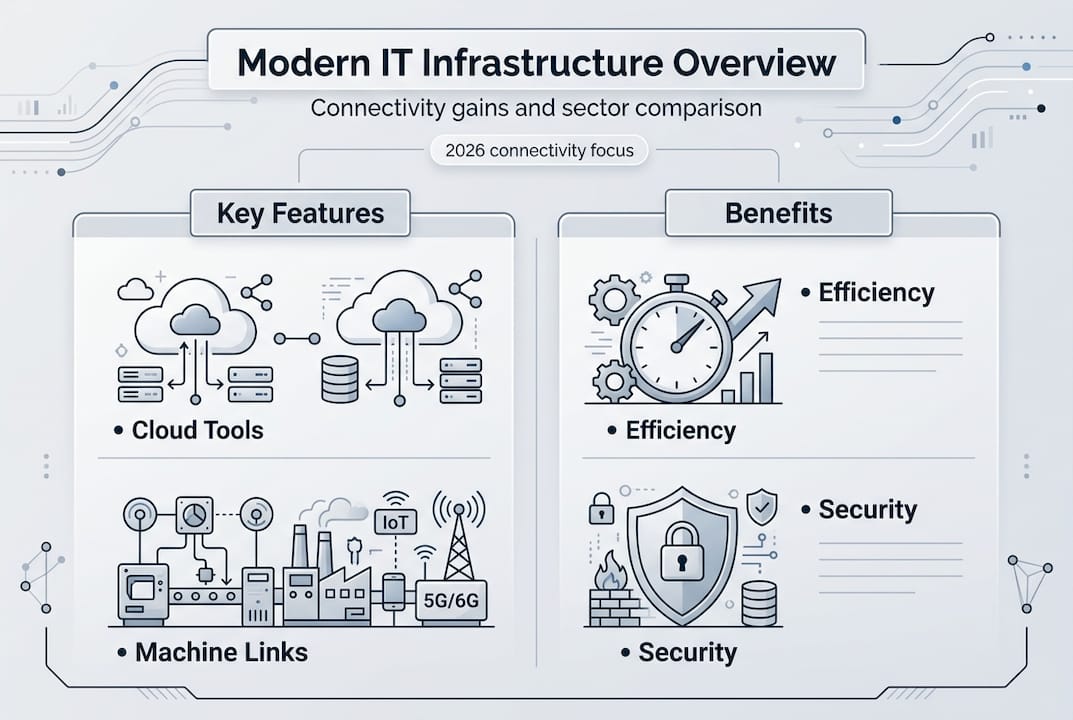
Successful modernisation aligns technology investments with pedagogical objectives. Infrastructure upgrades should enable innovative teaching methods, support personalised learning pathways, and facilitate data-driven decision-making. This alignment ensures technology serves educational missions rather than existing as isolated systems.
Institutions reviewing education IT infrastructure options discover that modern platforms integrate seamlessly with existing tools whilst providing growth capacity. Planning for education IT in 2025 and beyond requires strategies that accommodate emerging technologies without requiring complete overhauls.
Pro Tip: Align IT infrastructure upgrades with pedagogical goals and learning outcome objectives to ensure technology investments directly support educational transformation rather than simply replacing old systems with new equivalents.
Discover professional IT infrastructure solutions
Transforming legacy infrastructure into modern, secure networks requires expertise spanning architecture design, implementation, and ongoing optimisation. Re-Solution delivers tailored IT modernisation services addressing connectivity and security challenges across manufacturing, hospitality, and education sectors. As a trusted Cisco partner with over 35 years of experience, we understand the unique requirements and constraints facing IT decision-makers.
Our professional IT solution services encompass comprehensive infrastructure assessments, strategic roadmap development, and hands-on implementation support. We help organisations navigate complex technology decisions whilst minimising disruption to ongoing operations. Cisco managed IT services provide continuous monitoring, proactive maintenance, and rapid issue resolution, freeing internal teams to focus on strategic initiatives.
Security remains paramount throughout modernisation journeys. Our Zero Trust security solutions implement defence-in-depth strategies that protect expanded connectivity without compromising usability. From network segmentation to endpoint protection, we design security architectures that evolve with emerging threats. Contact Re-Solution today to begin your modernisation journey with a partner committed to delivering measurable outcomes and long-term success.
Frequently asked questions
What is IT infrastructure modernisation?
IT infrastructure modernisation involves upgrading hardware, software, networks, and security systems to improve connectivity, efficiency, and threat protection. This transformation addresses legacy system limitations whilst enabling organisations to adopt cloud platforms, automation tools, and advanced analytics that drive competitive advantage.
How much does IT infrastructure modernisation cost?
Modernisation costs vary based on current infrastructure state, organisational size, and strategic objectives. Many organisations find that reducing the 75% of budgets consumed by legacy maintenance funds modernisation initiatives. Phased approaches spread costs over time whilst delivering incremental benefits that justify continued investment through measurable ROI.
How long does IT infrastructure modernisation take?
Timelines depend on scope and approach. Focused initiatives like connectivity upgrades may complete within weeks, as demonstrated by manufacturers achieving results rapidly. Comprehensive transformations typically span 12 to 24 months using phased strategies that prioritise critical systems whilst minimising operational disruption and validating benefits incrementally.
What security risks does modernisation address?
Modern infrastructure implements Zero Trust frameworks, network segmentation, endpoint protection, and continuous monitoring that legacy systems lack. These controls protect against ransomware, data breaches, and insider threats whilst ensuring regulatory compliance. Enhanced visibility enables rapid threat detection and response, reducing potential damage from security incidents.
Can we modernise without replacing all systems?
Wrap-and-extend strategies preserve existing investments whilst adding modern capabilities through integration layers and connectivity upgrades. This approach proves particularly effective for manufacturing environments where production systems cannot tolerate downtime. Hybrid architectures combine on-premises control with cloud scalability, enabling gradual migration without disruptive rip-and-replace projects.
Recommended
- How to Future-Proof IT Infrastructure for 2025 | Re-Solution
- Challenges in IT Infrastructure & How to Overcome | Re-Solution
- IT Infrastructure for Education in 2025 | Re-Solution
- Exploring Future of Network Solutions 2025 | Re-Solution
Article generated by BabyLoveGrowth