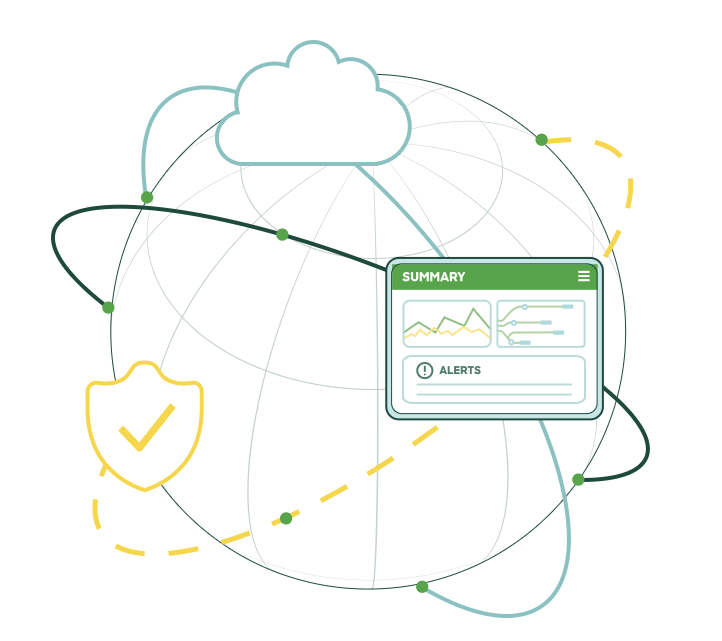
Secure MQTT deployments rest on four controls working together: transport encryption through TLS or mutual TLS, strong per-device identity, deny-by-default authorisation, and continuous monitoring paired with rapid patching. MQTT v5.0 adds native authentication exchange through the AUTH packet, and these controls sit alongside governance requirements such as tamper-evident logging and incident reporting timelines.
TL;DR:
- Transport encryption with TLS 1.3 or TLS 1.2 with forward-secret cipher suites is essential, along with certificate management to ensure secure sessions.
- MQTT v5.0 introduces protocol features such as the AUTH packet and reason codes, which improve native authentication, detailed feedback, and session control.
- Strong per-device identity verification through client certificates or tokens is critical, with automated credential lifecycle management to prevent leaks and unauthorized access.
- Default deny-by-default access control with narrow, device-scoped topic permissions and dynamic policy updates reduce the risk of breaches and lateral movement.
- Network segmentation, hardened broker deployment, and continuous monitoring with rapid patching are necessary to defend MQTT infrastructure from attacks and ensure traceability.
Table of Contents
- Core security controls: transport, identity, authorisation and governance explained
- Protocol-level security: what MQTT v5.0 adds over v3.1.1 and practical implications
- Transport security in practice: TLS, mTLS, session resumption and constrained devices
- Authentication options: certificates, SCRAM, JWT/OIDC and secure credential lifecycle
- Authorisation and access control: ACLs, RBAC and per-device/topic scoping
- Broker and deployment hardening: network design, listeners, ports and secure-by-default configuration
- Vulnerability management and incident readiness: patching, CVE response and monitoring
- Compliance and governance: applying security controls to meet regulatory expectations
- Practical secure-by-default checklist and test plan for an MQTT deployment
- Re-Solution perspective: how we approach MQTT security for enterprise and IIoT customers
- How Re-Solution can help with MQTT and IoT security
- FAQ
- Sources
Core security controls: transport, identity, authorisation and governance explained
MQTT was designed for lightweight publish and subscribe messaging, not for security by default. Every production deployment needs four pillars working in combination, because removing any one of them leaves a gap the others cannot cover.
Transport security protects data in transit from interception and tampering. Identity establishes who or what is connecting, which matters more in IIoT than in consumer apps because devices, not people, hold the credentials. Authorisation decides what an authenticated identity may actually do once connected, and governance ties the whole system together so that failures are visible and accountable.
- Transport: TLS or mutual TLS encrypts the session and, with client certificates, proves device identity at the network layer.
- Identity: certificates, SCRAM or token-based authentication confirm that a connecting client is who it claims to be.
- Authorisation: topic-level ACLs or role-based policies limit what an authenticated client can publish or subscribe to.
- Governance: logging, retention policy and defined incident notification timelines turn security controls into auditable evidence.
These layers interact. Transport security without strong identity still lets an attacker who steals a shared password connect freely. Identity without authorisation lets any verified device subscribe to every topic on the broker, which is exactly the failure pattern behind several real-world MQTT incidents. NIST’s OpenFMB testing found that TLS with X.509 client authentication was effective at securing message exchange, but the report still recommended per-device authentication and ACLs as compensating controls rather than relying on transport encryption alone.
Pro Tip: Treat logging and retention policy as part of the security architecture from day one, not as a compliance afterthought bolted on before an audit.
Protocol-level security: what MQTT v5.0 adds over v3.1.1 and practical implications
MQTT v5.0, standardised by OASIS, introduces protocol-level features that earlier versions never had. Section 5 of the specification explicitly recommends implementations support authentication, authorisation and secure communication as part of a compliant deployment, rather than leaving them entirely to the broker vendor.
- AUTH packet: supports extended, multi-step authentication exchanges such as challenge-response or SCRAM, which v3.1.1 cannot carry natively.
- Reason codes: give clients precise feedback on why a connection, subscription or publish was rejected, replacing the vague failure behaviour of earlier versions.
- Session and property controls: let operators set session expiry, message expiry and receive maximums, reducing the window an attacker has to exploit a stale or abandoned session.
One operational detail matters for security testing: MQTT 3.1.1 does not return a negative PUBACK when a publish is denied by an ACL. A denied message simply disappears from the publisher’s perspective, which means audit logs, not protocol acknowledgements, are the only reliable way to detect suppressed traffic on older clients. MQTT v5.0 reason codes close that gap for clients that support it.
Mixed-version fleets are common in IIoT, where field devices often run firmware that predates v5.0 support. Staged migration testing should confirm that the broker enforces identical ACL and authentication policy regardless of protocol version, and that denial behaviour on v3.1.1 clients is still captured in logs even though the client itself receives no explicit rejection.
Transport security in practice: TLS, mTLS, session resumption and constrained devices
TLS 1.3 should be the default for new MQTT deployments. It removes outdated cipher suites, supports forward secrecy by default and reduces handshake round trips compared with TLS 1.2. Hardened TLS 1.2 configurations, with forward-secret cipher suites only, remain acceptable where a broker, library or constrained device genuinely cannot support 1.3 yet, but that should be treated as a temporary exception rather than a target state.
Mutual TLS adds real operational cost. Certificate issuance, rotation and revocation checking through CRLs or OCSP all require infrastructure most teams do not build overnight. NIST’s OpenFMB proof-of-concept measured a noticeable handshake overhead when adding TLS and X.509 authentication to field device communications, though the report still judged the approach effective enough to recommend. Session resumption through TLS session tickets reduces that overhead on reconnect, which matters for devices that drop and re-establish connections frequently on cellular or unreliable links.
- TLS 1.3 by default, hardened TLS 1.2 only as a documented exception.
- Forward-secret cipher suites so a compromised private key cannot decrypt previously captured traffic.
- Session resumption to cut repeated handshake cost on devices that reconnect often.
- Certificate rotation and revocation checking built into the deployment from the start, not added after the first incident.
Constrained devices, such as battery-powered sensors on a microcontroller, often cannot run a full TLS stack. Three patterns work in practice: DTLS for devices that need encryption over unreliable transports, a gateway that terminates TLS on behalf of a cluster of simple devices and relays over a trusted local segment, or token-based authentication carried inside an already-encrypted gateway connection rather than full mTLS on the constrained device itself. Mosquitto’s TLS configuration guidance covers practical certificate generation and setup for teams building this from scratch.
Pro Tip: Gateway-based TLS offload is often the pragmatic choice for sensor fleets. It keeps strong encryption on the network while avoiding the cost of running a full TLS stack on every low-power device.
Authentication options: certificates, SCRAM, JWT/OIDC and secure credential lifecycle
Choosing an authentication method is a trade-off between assurance, scale and operational effort. X.509 client certificates paired with mTLS give the strongest identity assurance, binding each device to a certificate whose common name or Extended Key Usage field can be matched against expected device identities. That strength is also why hardware-backed authentication matters at the highest assurance levels: AAL3-grade authentication, as described in guidance on Authentication Assurance Level 3, typically requires a cryptographic authenticator bound to hardware, a principle that applies equally well to high-value MQTT identities, not just human logins.
SCRAM, supported through the MQTT v5.0 AUTH packet, offers salted, challenge-response authentication without transmitting a password in the clear, and it suits deployments that cannot yet manage per-device certificates. Plain username and password authentication should be treated as a fallback, never a long-term design choice, because credentials are easy to leak and hard to rotate safely across large fleets. JWT and OIDC tokens suit large or federated deployments where devices authenticate through an existing identity provider, letting token expiry do some of the revocation work automatically.
- X.509 certificates with mTLS for the strongest per-device identity assurance.
- SCRAM over the AUTH packet where certificate provisioning is not yet feasible.
- JWT or OIDC tokens for federated or large-scale fleets with an existing identity provider.
- Automated provisioning and rotation so credential lifecycle does not depend on manual intervention at scale.
Whichever method is chosen, credential lifecycle needs the same discipline: automated provisioning at enrolment, defined rotation windows, and a revocation path that takes effect immediately rather than at the next scheduled restart.
Authorisation and access control: ACLs, RBAC and per-device/topic scoping
Authentication only confirms identity. Authorisation decides what that identity can actually do, and it is the control that limits the damage when a single device credential is compromised. The safest default is deny-by-default: no client can publish or subscribe to anything until an explicit rule grants it, with topic namespaces scoped narrowly per device or per site rather than relying on broad wildcard subscriptions.
- Deny-by-default policy as the starting state for every new client and topic.
- Narrow topic namespaces, such as
site/building/device-id/telemetry, instead of broad wildcard grants. - Runtime policy updates so a compromised device can be blocked without restarting the broker.
- Denial logging so every rejected publish or subscribe attempt is visible for forensic review.
Static configuration files work for small, stable fleets, but they do not scale well for IIoT deployments where devices are added, retired or re-roled frequently. Research on dynamic RBAC for IoT policy management found that API-driven policy updates reduce downtime and support faster revocation compared with static configuration, because a role change takes effect immediately rather than waiting for a broker restart. Mosquitto’s dynamic security plugin implements this pattern directly, applying role-based authentication and ACL changes at runtime with deny-by-default semantics built in.
Testing authorisation is as important as designing it. A denied publish on an MQTT 3.1.1 client produces no negative acknowledgement, so the only way to confirm a policy actually blocks unauthorised traffic is to attempt the denied operation deliberately and check that it appears in the broker’s audit log rather than assuming silence means success.

Broker and deployment hardening: network design, listeners, ports and secure-by-default configuration
Protocol and authorisation controls only work if the broker itself is deployed on a hardened foundation. A handful of configuration and network decisions make the difference between a broker that resists opportunistic scanning and one that becomes the easiest way into an IIoT network.
- Disable plaintext listeners entirely in production and expose only TLS-secured ports, closing the default unencrypted listener that many brokers ship with out of the box.
- Place the broker on a segmented network, separate from general corporate traffic, following OT network segmentation principles so a compromised device cannot reach unrelated systems.
- Protect administrative interfaces behind a dedicated management plane, never exposed on the same listener as device traffic.
- Authenticate the cluster bus in multi-node deployments so inter-broker gossip cannot be spoofed or injected by a rogue node.
- Apply policy changes through hot-reload where supported, and confirm the semantics: a revoked identity should be evicted from any existing session immediately, not merely blocked on the next connection attempt.
- Run the broker process as a non-root user, apply operating system and library patches on a defined schedule, and store TLS private keys and credentials in a secrets manager rather than in plain configuration files.
None of these steps assumes the internal network is trustworthy. Authentication and authorisation should be enforced even on internal segments, because a single compromised device on a “trusted” VLAN is enough to enable lateral movement if the broker itself does not check every connection on its merits. Teams building out VLAN structure for IoT traffic can use a VLAN design checklist to keep device segments properly isolated from the rest of the estate.
Vulnerability management and incident readiness: patching, CVE response and monitoring
Broker and client software, like any software, accumulates vulnerabilities over time, and MQTT deployments need a defined patch cadence rather than ad hoc updates triggered only after an incident. Maintaining a test environment that mirrors production lets a security team validate a patch before pushing it to devices that may be difficult to reach once deployed in the field.
- Subscribe to vendor and CVE advisories for every broker and client library in the deployment, not just the broker itself.
- Prioritise critical CVEs for accelerated remediation, especially anything affecting authentication or authorisation logic.
- Maintain a staging environment that mirrors production configuration for patch validation before rollout.
- Alert on monitoring anomalies: sudden spikes in authentication failures, unexpected wildcard subscriptions and unexplained publish activity are early signals of compromise.
Two CVE examples show why cadence matters. The NVD entry for CVE-2026-7368 documents a case where missing per-device authorisation allowed fleet-wide access once a single device credential was obtained, a direct illustration of why authorisation scoping matters as much as authentication itself. Separately, the coreMQTT v5.0.1 release notes describe a property parser bounds issue in earlier versions that could be used to trigger a denial-of-service condition on affected clients, remediated by upgrading to v5.0.1.
Tamper-evident logging matters most in the aftermath of an incident, when the question is not just what happened but whether the logs themselves can be trusted. Logs that an attacker could edit after the fact are of limited value in post-incident analysis or in satisfying a regulator asking for evidence of what was monitored at the time.
Compliance and governance: applying security controls to meet regulatory expectations
Security controls and compliance evidence are the same work viewed from different angles. Encryption, access control and monitoring satisfy both the technical need to stop an attack and the governance need to demonstrate, after the fact, that appropriate controls were in place. Directives such as NIS2 push organisations running industrial and IoT infrastructure toward exactly the controls already covered here: encrypted transport, access control tied to identity, and defined incident reporting timelines.
- Encryption and access control logs double as audit evidence for transport and authorisation requirements.
- Change logs and policy test results demonstrate that controls are continuously maintained, not configured once and forgotten.
- Defined incident reporting timelines should be agreed before an incident occurs, not drafted during one.
- Broker high-availability design should be documented against the same SLA expectations as any other regulated system.
Guidance on cybersecurity essentials covers the broader programme these items sit within, including the incident response and logging practices regulators increasingly expect to see as standard.
Practical secure-by-default checklist and test plan for an MQTT deployment
A short, ordered checklist turns the controls above into something a team can actually verify before go-live.
- Enforce TLS 1.3 (or hardened TLS 1.2) on every listener and disable plaintext ports.
- Issue per-device certificates or tokens; never share credentials across devices.
- Configure deny-by-default ACLs scoped to narrow, per-device topic namespaces.
- Segment the broker network and restrict administrative access to a management plane.
- Enable tamper-evident logging for connections, denials and policy changes.
- Set a patch cadence and confirm it against current vendor advisories.
- Document an incident escalation path and reporting timeline before launch.
Validation should include four tests: a handshake check confirming plaintext connections are refused outright, a denial test confirming an out-of-scope publish or subscribe is both blocked and logged, a certificate revocation check confirming a revoked identity is rejected immediately rather than at next renewal, and a load-impact check confirming TLS and ACL enforcement do not introduce unacceptable latency on constrained devices.
Pro Tip: Escalate from routine operations to a formal security incident the moment a denial pattern repeats across multiple devices at once; that usually signals a compromised credential rather than a misconfiguration.
An issue should move from operations to incident response as soon as a single failure pattern spans multiple devices, a revoked credential is reused successfully, or logs show access outside an expected topic scope.
Re-Solution perspective: how we approach MQTT security for enterprise and IIoT customers
We work with Cisco network infrastructure across various sectors, where secure IIoT connectivity is often part of a wider network estate rather than a standalone project. Our network audits and managed services include protocol-level hardening, segmentation and monitoring directly into the assessments we run and the operations we support, rather than treating MQTT security as a separate exercise. Organisations typically seek external audits or managed oversight when fleet complexity, regulatory obligations or limited in-house security capacity make it the more practical route.
— Jacob
How Re-Solution can help with MQTT and IoT security
Getting the controls in this guide right across a live fleet takes time most internal IT teams do not have spare, particularly once segmentation, certificate lifecycle and continuous monitoring all need to work together. We offer a structured route through that work rather than leaving it to a single internal owner.

- A network audit that reviews broker placement, segmentation and access control against the practices covered above.
- Managed services for ongoing monitoring, patch coordination and policy maintenance once the initial hardening is in place.
- Network As A Service for organisations that want secure, segmented infrastructure delivered as an ongoing subscription rather than a one-off project.
Get in touch through our contact page to discuss which of these fits your current IIoT estate.
FAQ
Does MQTT have security?
MQTT itself provides no security by default; the protocol relies on implementations adding TLS for transport encryption and separate authentication and authorisation mechanisms. MQTT v5.0 explicitly recommends that implementations offer these controls, including through the AUTH packet for extended authentication exchanges.
What are the downsides of using MQTT?
MQTT’s lightweight design means security is opt-in rather than built in, so a misconfigured broker can run with no encryption or access control at all. Older MQTT 3.1.1 clients also give no explicit rejection signal when a publish is denied, which makes audit logging essential for detecting blocked traffic that would otherwise look like silent failure.
What does MQTT stand for?
MQTT originally stood for Message Queuing Telemetry Transport, though the current specification treats the name as simply MQTT rather than an expanded acronym. It is a lightweight publish-subscribe messaging protocol widely used in IoT and industrial telemetry.
Is MQTT still relevant?
MQTT remains a standard protocol for IoT and industrial telemetry, with ongoing development reflected in the OASIS MQTT v5.0 specification and continued library updates such as coreMQTT’s v5.0.1 release. Its lightweight footprint keeps it a common choice for constrained devices where heavier protocols are impractical.
How do I choose an authentication method for MQTT devices?
The right method depends on scale and existing infrastructure: client certificates with mutual TLS give the strongest per-device identity, SCRAM suits deployments without certificate provisioning, and JWT or OIDC tokens work well for large, federated fleets with an existing identity provider. Whichever method is chosen, automated provisioning and defined rotation windows matter more than the specific mechanism.
Sources
- MQTT v5.0 (OASIS)
- OpenFMB proof-of-concept and MQTT security controls (NIST TN)
- NVD: CVE-2026-7368 advisory
Recommended
- IoT security explained for IT decision-makers
- OT network segmentation for cybersecurity and OT teams
- Secure network design: proven examples for robust protection
- Modern network security: A complete guide for IT leaders