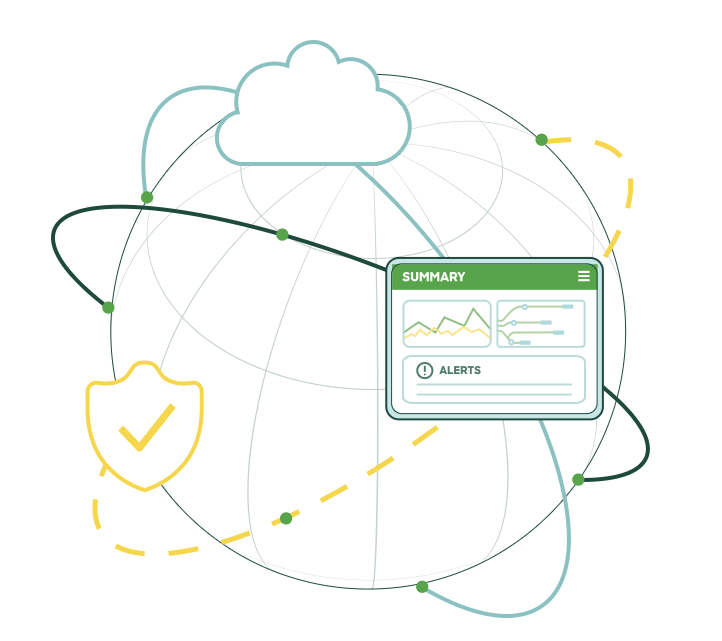
Use a certificate-based zero-touch bootstrap, choosing between BRSKI, FIDO Device Onboard or Matter commissioning according to supply-chain shape, then verify the choice with a staged test harness before any production rollout. The standards worth evaluating are BRSKI (RFC 8995), its extension for alternative enrolment, FDO and EST. Start with a small lab run against real hardware before committing to a fleet-wide pattern.
TL;DR:
- Select the bootstrap protocol based on your supply chain shape, choosing BRSKI for control and enterprise trust, or FIDO for flexible distribution scenarios.
- Deploy a test harness with disposable identities and staged checks to validate success criteria before a full fleet rollout.
- Ensure devices come with factory identity support, like IDevID or vouchers, and perform brownfield reconciliation to prevent certificate mismatches.
- Build a certificate lifecycle pipeline with automatic rotation and revocation to maintain long-term security and facilitate incident response.
- Integrate cloud registration with onboarding to verify device identity alignment, backoff retries for constrained devices, and minimize sensitive log exposure.
Table of Contents
- A stepwise onboarding framework: procurement to production
- Protocol primer: BRSKI, FIDO Device Onboard, Matter and EST variants
- Device readiness: factory identity, constrained devices and brownfield prep
- Automation and certificate lifecycle: issuance, rotation and test harnesses
- Security, standards and UK compliance signals
- Decision checklist and questions to ask suppliers
- Re-Solution perspective: a Cisco-aligned view on managed onboarding
- The impact of onboarding strategy on device lifecycle management
- Integration with IoT platforms and cloud services
- Privacy considerations during device onboarding
- What actually matters in IoT device onboarding
- How Re-Solution supports secure device onboarding
- FAQ
- Sources
A stepwise onboarding framework: procurement to production
A reliable onboarding programme follows the same shape whether you are deploying ten sensors or ten thousand gateways. The branching point is whether devices arrive with a usable factory identity (greenfield) or already carry legacy credentials and firmware that need reconciling (brownfield).
- Procure with identity in mind: confirm the device ships with a factory IDevID or an equivalent ownership voucher before committing to a purchase order.
- Baseline firmware and inventory: record firmware versions, serial numbers and any existing certificates against your asset register.
- Select the bootstrap protocol: match BRSKI, FDO or Matter commissioning to the supply chain and device class, as set out below.
- Build a test harness: issue disposable test identities and run connectivity, rotation and policy checks against a staging environment.
- Roll out in waves: deploy a pilot batch, confirm success criteria (enrolment time, certificate validity, failed-attempt rate), then expand.
Success criteria should be defined before the pilot starts: a target enrolment success rate, a maximum time-to-first-connection and a rollback path if either is missed. Most teams can move from pilot to full rollout within two to four weeks once the harness is proven.
Protocol primer: BRSKI, FIDO Device Onboard, Matter and EST variants
Picking a bootstrap protocol is really a decision about where trust originates and how late in the supply chain ownership gets decided. Each option below solves a different version of that problem.
- BRSKI and cBRSKI: rely on a factory-installed X.509 Initial Device Identifier (IDevID) and a manufacturer authorisation service (MASA) that issues a voucher, giving enterprises a strong zero-touch path once the device reaches its network; cBRSKI adapts this for constrained devices.
- FIDO Device Onboard (FDO): uses a late-binding ownership voucher model and a rendezvous server, so devices can be manufactured without a predetermined owner and bind to the correct platform the first time they are powered on, which suits distributors and system integrators selling into varied customer bases.
- Matter commissioning: joins a device to a fabric through BLE, QR code or PASE discovery, then establishes an operational session using CASE. According to Silicon Labs’ documentation, this solves fabric-level commissioning rather than enterprise inventory or lifecycle governance, so it suits consumer and small-site deployments more than managed fleets.
- EST versus BRSKI-AE: standard EST assumes a synchronous, always-connected enrolment exchange. Where that assumption breaks down, such as constrained radio networks or backends that process requests asynchronously, RFC 9733 describes BRSKI-AE, which carries authenticated, self-contained enrolment objects like CMP so a registrar can forward signed requests without needing a live session to the certificate authority.
The practical rule: choose BRSKI when you control the device’s manufacturing relationship and want enterprise-grade zero-touch, choose FDO when ownership is decided late in distribution, and treat Matter commissioning as a fabric-joining step that still needs separate lifecycle tooling behind it.
Device readiness: factory identity, constrained devices and brownfield prep
Before any bootstrap protocol runs, the device needs an identity story that survives beyond the factory floor. A pledge should never treat its factory IDevID as a permanent operational credential; the voucher exchange should imprint a domain-specific LDevID, with short-lived operational certificates issued afterwards so revocation and rotation stay controllable.
- Factory versus operational identity: the IDevID proves manufacturing provenance, while the LDevID is what your network actually trusts day to day, and the handover between the two is the point an attacker would target first.
- Constrained device patterns: devices with limited memory or bandwidth typically need compact CBOR-encoded vouchers and EST-over-CoAPS rather than full HTTP-based EST, keeping handshake size and storage within what the hardware can hold.
- Brownfield reconciliation: legacy estates need a wipe-and-reissue pass, firmware validation against a known-good baseline, and inventory reconciliation so the asset register matches what is physically deployed before any new credential is issued.
Skipping the brownfield step is the single most common cause of mismatched certificates turning up months into a rollout.
Automation and certificate lifecycle: issuance, rotation and test harnesses
Automation only earns its keep when the certificate lifecycle behind it is equally disciplined. A registrar, MASA and rendezvous service can run unattended, but each handoff between them needs a clear audit trail: which voucher authorised which device, and which certificate authority issued the resulting operational certificate. Where EST cannot complete a live exchange, BRSKI-AE lets the registrar forward a signed enrolment object instead, preserving proof of origin without demanding a constant connection.

Short-lived operational certificates, renewed automatically well before expiry, reduce the blast radius of a compromised key and make revocation a routine event rather than an incident. Build rotation and revocation paths into the same pipeline that handles first-time enrolment, rather than treating them as a separate project later.
Testing deserves the same rigour as production. AWS IoT Core’s Device Advisor workflow recommends creating disposable test identities and running production-like connectivity, policy and certificate-rotation tests before mass deployment, a pattern worth mirroring even outside that specific platform.
Pro Tip: Run your certificate rotation test against a device that is intentionally offline for part of the cycle; it catches queuing bugs that a constantly connected test rig never will.
Security, standards and UK compliance signals
Technical controls only count as secure once they map to a standard someone can audit against. BRSKI’s identity and voucher model comes from RFC 8995, its alternative enrolment extension from RFC 9733, and FDO’s ownership voucher and rendezvous flow from the FIDO Alliance’s own specification. Matter’s commissioning security model is documented separately from its application-layer behaviour, which is why it should not be mistaken for a full lifecycle framework.
- Baseline security standards: ETSI EN 303 645 sets baseline requirements for consumer connectable products, covering default credentials, vulnerability disclosure and secure update mechanisms.
- UK product security obligations: the UK PSTI product security regime requires manufacturers to publish a statement of compliance, declare minimum security update periods and provide a clear route for reporting vulnerabilities.
- Operational governance: pair these with ongoing telemetry, a documented update policy and supply-chain assurance checks so compliance does not stop at the point of sale.
Decision checklist and questions to ask suppliers
Before committing to a device family or OEM relationship, work through a short list of checks that separate a smooth rollout from months of rework.
- Does the device ship with a factory IDevID or an equivalent ownership voucher mechanism?
- Which enrolment protocols does the manufacturer actually support in firmware, not just on a datasheet?
- What is the published firmware baseline, and how often are updates released?
- Is a test harness or simulator available for pre-production validation?
- Does the OEM publish a PSTI statement of compliance and a minimum update period?
| Question area | What to ask | Red flag if missing |
|---|---|---|
| Identity | Does the device have a factory IDevID or voucher support? | No verifiable factory identity |
| Enrolment | Which of BRSKI, FDO or EST does firmware support? | Proprietary, undocumented enrolment only |
| Compliance | Is a PSTI statement of compliance published? | No statement of compliance available |
| Testing | Is a sandbox or test harness provided? | No way to test before bulk purchase |
Treat an OEM’s inability to answer any of these directly as a reason to delay procurement, not a detail to chase up later.
Re-Solution perspective: a Cisco-aligned view on managed onboarding
As a Cisco partner with over 35 years of experience in Cisco IT infrastructure, network solutions and security services, we bring the standards above into tailored engagements across education, manufacturing, logistics and hospitality.
The impact of onboarding strategy on device lifecycle management
The protocol chosen at onboarding shapes everything that happens to a device afterwards, not just the first connection. A device onboarded through BRSKI with a proper LDevID handover inherits a rotation and revocation path from day one, so a compromised unit can be isolated without a site visit. A device onboarded through an ad hoc script with a long-lived shared credential carries that weakness for its entire service life, because retrofitting proper identity later usually means a second wipe-and-reissue cycle at scale.
Lifecycle management also depends on what the onboarding process records. If the bootstrap step logs which voucher authorised which device and which certificate authority issued the resulting credential, that audit trail becomes the backbone of later patch management, decommissioning and incident response. Skip that logging at onboarding and you are reconstructing device history by hand when something goes wrong.
Firmware update strategy is tied in too: devices onboarded with a documented baseline and an update channel built into the bootstrap flow tend to stay current, while devices onboarded informally often miss update cycles because no system owns the relationship between identity and patch status. The NIST SP 1800-36 style of network-layer onboarding architecture treats identity, posture and lifecycle as one continuous problem rather than three separate ones, and that framing holds up well in practice.
Integration with IoT platforms and cloud services
Onboarding does not end at the network edge. Once a device has an operational certificate, it typically needs to register with a cloud IoT platform, which means the bootstrap flow and the platform’s device registry need to agree on identity before anything useful happens. A mismatch here, where the certificate’s subject name does not match what the platform expects, is one of the more common causes of devices that connect to the network but never appear in the application layer.
Cloud platforms generally expect a device to present a certificate, register as a managed object such as an AWS IoT Thing or equivalent, and have a policy attached that scopes what it can publish and subscribe to. Building that registration step into the same automation that handles certificate issuance avoids a manual handoff between network and application teams, which is where delays and misconfigurations tend to accumulate.
For constrained devices connecting over cellular or low-power radio, the integration step also needs to account for intermittent connectivity: a device that completes bootstrap but cannot reach the cloud platform on its first attempt should retry with backoff rather than fail permanently, and the test harness described earlier should include that scenario explicitly. Getting this right once, in the test environment, is considerably cheaper than diagnosing it across a fleet already in the field.
Privacy considerations during device onboarding
Device onboarding routinely touches personal and organisational data, even for devices that look purely operational. A device’s serial number, location metadata and network identifiers can together identify a specific site or, in consumer contexts, a specific household, so the bootstrap flow should minimise what gets logged and where it is stored.
Vouchers and enrolment logs are a particular concern because they often contain enough detail, device identity, timestamp and network location, to reconstruct a deployment map if they leak. Treat these logs with the same access controls as any other sensitive operational data, and set a retention period rather than keeping them indefinitely.
Where devices are deployed in shared or public-facing environments, such as hospitality or shared workspace settings, onboarding processes should also avoid exposing commissioning interfaces (a BLE pairing window or an open QR code flow) longer than necessary, since that window is also a window for an unauthorised device to attempt enrolment. Closing it automatically after a defined period is a small change that removes a real opportunity for abuse.
What actually matters in IoT device onboarding
The industry conversation around onboarding spends a lot of energy on reducing manual steps, and not enough on what happens after the first successful connection. Zero-touch is frequently sold as the end goal, but a device that onboards automatically with a weak or long-lived credential is not more secure than one a technician configures by hand with proper short-lived certificates; it is just faster to compromise.
The conventional advice to “pick a zero-touch protocol and automate” undersells how much the choice of protocol determines your options years later. BRSKI’s manufacturer voucher model assumes you have a relationship with that manufacturer’s MASA infrastructure for the life of the device; FDO’s late binding is a better fit when that relationship does not exist yet at purchase time. Treating these as interchangeable, as some vendor material does, leads teams to pick whichever protocol a single device supports rather than the one that matches their supply chain.
If there is one priority worth acting on first, it is building the certificate rotation and revocation path before the fleet grows, not after. Retrofitting identity governance onto thousands of already-deployed devices is a far harder problem than designing it into the first hundred.
— Jacob
How Re-Solution supports secure device onboarding
If your onboarding programme needs network infrastructure that can actually enforce the certificate lifecycle and segmentation decisions above, that is where our Managed Services and Network as a Service engagements come in, alongside Network Audits and Wireless Surveys for teams that need site-level validation before a rollout begins.
For a technical onboarding checklist written for operations teams rather than engineers, our partners at SeeRM cover the same readiness questions from a slightly different angle. Where you need the network side handled directly, get in touch and we will map your device estate to the right engagement.
FAQ
What are the 5 C’s of IoT?
The “5 C’s” is an informal framework rather than a standardised one, and different sources define it differently. A common version covers connectivity, data collection, computing, caching and visualisation as stages a device’s data passes through after onboarding.
What are five examples of IoT devices?
Common examples include smart thermostats, industrial sensors on manufacturing lines, connected access control readers, warehouse asset trackers and building management sensors used in commercial sites. Each of these needs a bootstrap identity before it can be trusted on a network.
What exactly is an IoT device?
An IoT device is any physical object with embedded sensors, software or connectivity that lets it collect or exchange data over a network without constant human operation. The category spans consumer gadgets and industrial equipment, which is why onboarding requirements vary so widely between a smart bulb and a factory sensor.
What are the components of an IoT platform?
Definitions vary, but a typical IoT platform includes device connectivity and management, a message broker, data storage, rules or processing logic, an application layer, security and identity management, and integration APIs. Onboarding sits at the identity and connectivity layer, feeding the rest of the stack once a device is trusted.
How do I choose between BRSKI and FIDO Device Onboard?
Choose BRSKI when you control the manufacturing relationship and want a manufacturer-backed voucher chain for enterprise zero-touch deployment. Choose FDO when ownership is decided late in the supply chain, such as distributor or reseller scenarios where the final customer is not known at manufacture time.
Sources
- RFC 9733 – BRSKI with Alternative Enrollment (BRSKI-AE)
- FIDO Device Onboard (FDO) overview
- Silicon Labs — Matter commissioning and security
- AWS IoT Core Device Advisor workflow
- UK product security and telecommunications infrastructure: product security regime
Recommended
- IoT networks explained for IT and business leaders
- Validation First IoT VLAN Checklist for Network Engineers (35 Years)
- IoT security explained for IT decision-makers
- Engineering Firm Uses Cisco ISE for Compliance