Housing association network security comes down to three things: knowing every device and connection across offices, schemes and blocks, separating the systems that matter from the ones that do not, and being able to recover when something fails. Doing that across a dispersed estate is a specialist job, which is why associations bring in a Cisco-certified infrastructure partner such as Re-Solution to audit, design and run the network. This guide sets out what the regulator and the National Cyber Security Centre (NCSC) expect, the controls that follow, and how to put them in order.
TL;DR
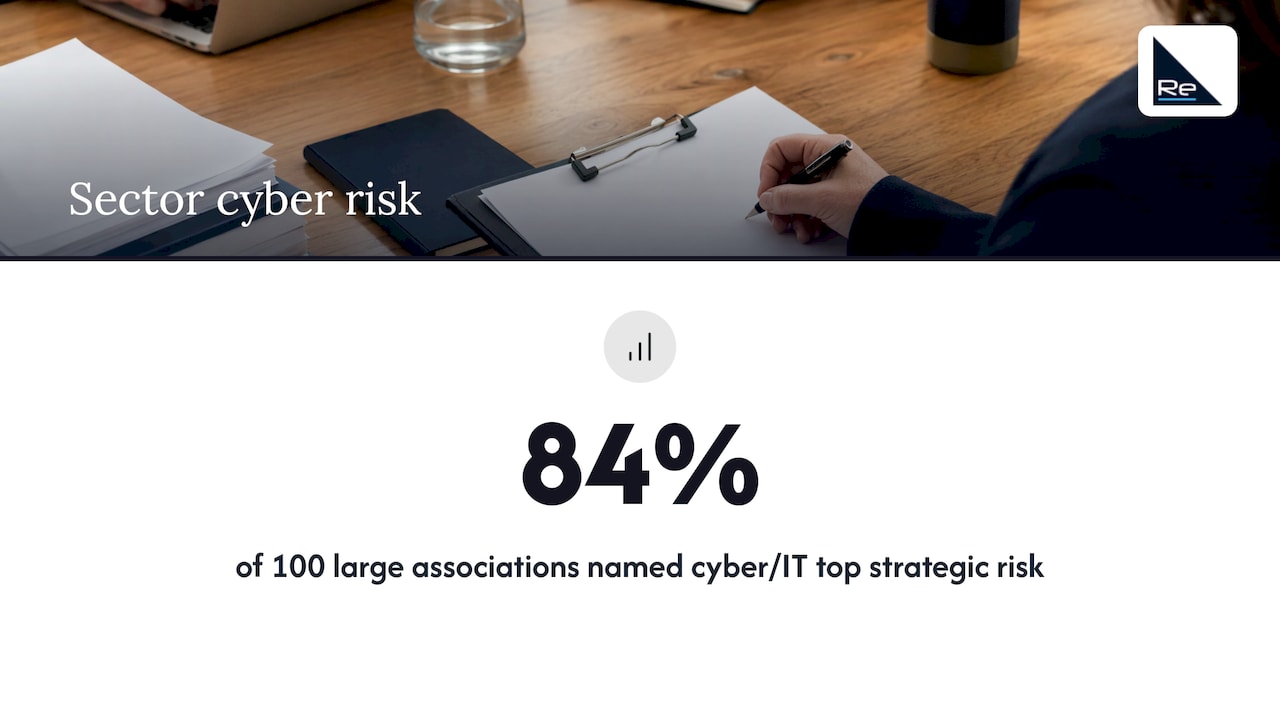
- Cyber security and IT management was the most common strategic risk among 100 large UK housing associations for a third year running, named by 84% of them.
- The Regulator of Social Housing (RSH) expects boards to manage cyber threats actively and to hold a tested incident response plan.
- The core controls are firewalls with a deny-by-default rule, network segmentation, least-privilege access, patching, monitored logs and clean offline backups.
- Smart blocks, building management systems (BMS) and supplier connections widen the attack surface, so they belong in the risk assessment.
- A network audit is the sensible first step: it shows what is connected, what is exposed and what to fix first.
Table of Contents
- Why this is a board-level risk
- What a housing association network actually covers
- The baseline controls
- Segmentation: where blocks and schemes differ from offices
- Suppliers and contractors: accountability stays with you
- Planning for an incident
- Start with an audit
- How Re-Solution supports housing networks
- Perspective
- FAQ
- Sources
Why this is a board-level risk
Housing associations hold sensitive data on tenants, including identity, finances, health and vulnerability information, and they depend on digital systems for repairs, rent collection, safety checks and contact centres. When those systems stop, residents feel it quickly.
The pattern is visible in the sector’s own reporting. Inside Housing’s Risk Register Survey 2026 covered the 2024/25 financial year and found cyber security and IT management was the most common strategic risk for a third consecutive year, cited by 84% of 100 large associations. The survey also lists 20 examples of controls that associations use to mitigate it.
The regulator says the same. Its Sector Risk Profile 2024 reports that ransomware and extortion attacks have grown significantly, that the NCSC regards them as the most acute cyber threat for most UK organisations, and that boards need a proactive cyber incident response plan aligned with business continuity and recovery plans. The RSH’s Sector Risk Profile 2026, announced on 22 October 2026, again stresses cyber security, data protection and operational resilience as social landlords rely more on digital systems.
There is a practical point in the 2024 profile too. The NCSC notes that artificial intelligence is likely to increase the speed and scale of some attacks, yet the most common attacks remain relatively unsophisticated and can be defended against with simple steps that raise resilience. For most associations, the gains come from getting the fundamentals right across the whole estate, not from exotic tooling.
What a housing association network actually covers
A housing association rarely runs one network. It runs many, with different owners and different risk:
- Head office and regional offices: staff devices, finance, HR, housing management and CRM systems.
- Customer contact and repairs operations: telephony, mobile workforce devices and contractor access.
- Schemes and community buildings: sheltered housing, community rooms, shared Wi-Fi and door entry.
- Resident-facing services: portals, apps and, in some developments, managed Wi-Fi or broadband.
- Building systems: BMS, heating controls, access control, CCTV, fire and safety sensors, smart meters and other Internet of Things (IoT) devices.
- Supplier and contractor connections: managed service providers, repairs contractors, software-as-a-service platforms.
The NCSC’s Network security fundamentals begins with identifying all network assets. For a dispersed estate this is the hardest step and the one most often skipped. You cannot segment, patch or monitor what you have not listed.
The baseline controls
The Information Commissioner’s Office (ICO) publishes a system and network security toolkit used in its data protection audits. Because associations are data controllers for large volumes of personal data, it is a useful checklist of what an auditor may expect. It covers:
- secure baseline configurations for devices and network equipment;
- up-to-date anti-malware and controls that prevent data loss;
- backups of systems that process personal information, with recovery tested;
- monitoring of the network against a baseline of normal activity;
- firewalls and intrusion detection;
- segmentation of the network into separate domains;
- regular vulnerability scans and independent penetration tests;
- a patch management policy, with assurances from third parties.
The NCSC adds more detail on how to build these in. Its guidance recommends least-privilege access with allow lists, secured privileged administrator accounts, protection of data in transit (HTTPS rather than HTTP, maintained VPNs), perimeter firewalls ending in a final deny-all rule, protected DNS and systems that update by default. It also asks organisations to consider zero trust architecture, in which no device or user is trusted simply because it sits inside the network.
The ICO page also summarises what Cyber Essentials v3.2 requires: firewalls on every in-scope device, default passwords changed, unauthenticated inbound connections blocked, and inbound rules that are approved and documented. Any administration interface reachable from the internet needs a documented business need and either multi-factor authentication or an IP allow list.
Turning the list into an order of work
A sensible sequence for an association with limited time:
- Inventory. Record every site, circuit, switch, access point, firewall and connected building system.
- Close the obvious gaps. Default credentials, unused ports, exposed admin interfaces, unpatched firewalls.
- Control access. Multi-factor authentication for remote and privileged access, and network access control so that only known devices join the network. Our network access controller guide explains how this works in practice.
- Segment. Separate corporate systems, resident Wi-Fi, building systems and supplier access.
- Monitor and back up. Central logging, alerting and offline backups that you have restored from.
- Rehearse. Run the incident plan with the people who would have to use it.
Segmentation: where blocks and schemes differ from offices
Segmentation means dividing the network so that a problem in one area cannot spread freely to others. In an office, that usually means separating servers, staff devices and guest Wi-Fi. In housing it also means separating the systems that keep a building running.
Heating controllers, lift monitoring, access control and CCTV were often installed by different contractors, each with a remote connection. If they sit on the same flat network as tenant records, a compromised sensor or a contractor’s laptop becomes a route to the data that matters most. The NCSC’s Connected Places Cyber Security Principles address this directly: firewall rules that deny everything except agreed critical services, default sensor configurations removed, unused ports closed and network management interfaces isolated.
The same principles say connected places must meet the requirements of the GDPR and the Data Protection Act 2018, and should consider the NIS Regulations 2018. A block with smart metering and resident Wi-Fi is, in effect, a small connected place.
Our practical guide to BMS network segmentation sets out how to separate building systems from corporate and resident traffic, and our housing sector page describes the work we do with property owners and developers.
Suppliers and contractors: accountability stays with you
Housing associations outsource heavily: repairs, software, hosting, IT support, smart building installation. The RSH’s 2024 profile says boards must understand the risks of processing personal data with third parties. That includes due diligence on suppliers’ security measures, standardised contractual clauses and documenting where data is held.
The NCSC is blunt that accountability cannot be outsourced. It advises including supplier roles in the risk assessment, writing security obligations into contracts, and requiring suppliers to report suspicious or malicious activity and to help when needed.
In practice, put these into every supplier contract and onboarding check:
- what network access the supplier needs, and for how long;
- how that access is authenticated and logged;
- where association data is stored and processed;
- how quickly they must report a suspected incident;
- what support they owe you during recovery.
Our article on procurement checks for outsourced network management covers the questions to ask when the supplier is running your network.
Planning for an incident
Assume a serious incident will happen at some point and decide in advance how you will respond. The NCSC’s Cyber Security Toolkit for Boards says an incident response plan should set out how severity is judged, who may take key decisions, and who contacts board members, suppliers and regulators. It should be reviewed as roles and structures change.
The NCSC’s September 2026 guidance, Preparing for a highly disruptive cyber incident, recommends that organisations of any size engage an NCSC-assured Cyber Incident Response provider in advance. It also advises:
- identify critical services and agree workarounds for them;
- define delegated decision-making authority;
- plan alternative communication channels in case email and phones are down;
- consider pre-emptive containment.
For an association, critical services typically include emergency repairs, gas and fire safety records, rent and payment processing, and contact with vulnerable residents. Decide which of those must run on paper or by phone if systems are down.
The same guidance points out that disruption does not always come from a direct attack: it can come from attacks on suppliers, managed service providers or technology providers that your services depend on. The NCSC and UK law enforcement do not encourage or condone paying ransoms, because there is no guarantee data will be recovered or deleted.
Technical readiness
The NCSC’s incident management guidance gives specific targets worth building into the network design:
- Keep current network diagrams showing internet gateways, IP ranges, VLANs, remote access, key systems and server locations. The NCSC says this can cut investigation time from days to hours.
- Retain logs for at least three months.
- Keep offline or segregated backups for at least a month, because online backups can be affected, and confirm backups are clean before restoring.
It also warns against overreacting during containment, since a hasty response can cause more damage than the incident itself. Write scenario-specific guidance and exercise it before you need it.
Reporting a personal data breach
If a breach puts people at risk, the ICO’s guidance on reporting a personal data breach says to notify the ICO as soon as possible and, where feasible, within 72 hours. If the risk to individuals is high, tell the affected people without undue delay. Where a malicious actor was involved, consider notifying your insurer, law enforcement and the NCSC. Name who makes that decision in your plan, and make sure they can be reached out of hours.
Start with an audit
Most associations that struggle with network security are not short of policies. They are short of an accurate picture of the estate. A network audit gives you that picture: devices, configurations, exposed services, segmentation gaps and the state of firewalls and wireless coverage. It turns the baseline list above into a prioritised set of fixes.
Our network audit checklist and firewall audit checklist show what evidence a useful audit produces. For the threat that boards ask about most, see our guide to ransomware attacks and prevention.
How Re-Solution supports housing networks
Re-Solution is a Cisco partner with more than 35 years of experience in IT infrastructure, network and security services. Housing associations and property developers are among the organisations we serve, and our consultants are certified.
The work maps onto the steps above. Network audits establish the baseline and the risks. Managed services cover ongoing support and monitoring of the network, and Network as a Service offers the network on a subscription basis. Our wireless surveys check coverage in buildings before resident or staff Wi-Fi is deployed. Our approach is tailored to each organisation’s sites and compliance needs.

If you want to see where your estate stands, talk to us about a network audit or explore the full range of professional services.
Perspective
Housing associations often ask us where to begin, and our answer is usually the same: with an accurate map. A dispersed estate grows by accretion. A scheme gets a new door entry system, a contractor installs a heating controller with remote access, a regional office adds a firewall that nobody documents. Each decision is reasonable on its own. Together they leave a network no one fully understands.
We believe the strongest security result comes from combining an audit with a managed model. The audit tells you what is there and what is exposed. Managed services keep it patched, monitored and documented afterwards, so the diagram the NCSC wants available in an incident actually matches the network.
With more than 35 years of Cisco experience, our view is that segmentation and access control deliver the most for housing: they keep building systems, resident Wi-Fi and tenant data apart, and they limit what any single compromised device or supplier can reach. Boards do not need to become network engineers. They need a partner who can show evidence, in plain terms, that the controls are in place.
Jacob
FAQ
What is the biggest network security risk for a housing association?
Ransomware is the threat the regulator and the NCSC flag most strongly. The RSH’s 2024 profile reports significant growth in ransomware and extortion attacks. The defences are the fundamentals: patched firewalls, multi-factor authentication, segmentation and offline backups that have been tested.
Do housing associations need Cyber Essentials?
Cyber Essentials is the government-backed baseline scheme, and its v3.2 requirements cover firewalls, changed default passwords and controlled inbound connections. The ICO’s guidance refers to those requirements. Check with your board, insurer and funders whether certification is expected in your contracts.
How should we secure smart building and BMS connections?
Place building systems on their own segment, deny all traffic except agreed services, remove default configurations and close unused ports. Isolate management interfaces and give contractors time-limited, logged access. Our BMS segmentation guide walks through the design.
When must a breach be reported to the ICO?
If a personal data breach is likely to put people at risk, notify the ICO as soon as possible and, where feasible, within 72 hours. If the risk to individuals is high, inform those people without undue delay. Your incident plan should name who makes that call.
Sources
- Sector risk profile 2024, GOV.UK
- Strong strategic leadership key to overcoming risks, says RSH, GOV.UK
- Risk Register Survey 2026: key insights for UK housing associations, Capsticks
- System and network security, ICO
- Network security fundamentals, NCSC
- Connected Places Cyber Security Principles infographic, NCSC
- Connected Places: Cyber Security Principles, NCSC
- Cyber Security Toolkit for Boards, NCSC
- Preparing for a highly disruptive cyber incident, NCSC
- Incident management: technical response capabilities, NCSC
- Personal data breach reporting, ICO
Recommended
- Secure network architecture: a practical guide for IT leaders
- How to Build a Secure Network: Step-by-Step
- Network Security Best Practices Guide
- Tackling Network Security Challenges Guide